
“GEGHARD”
SCIENTIFIC ANALYTICAL
FOUNDATION


2026
2026
2026-04-25
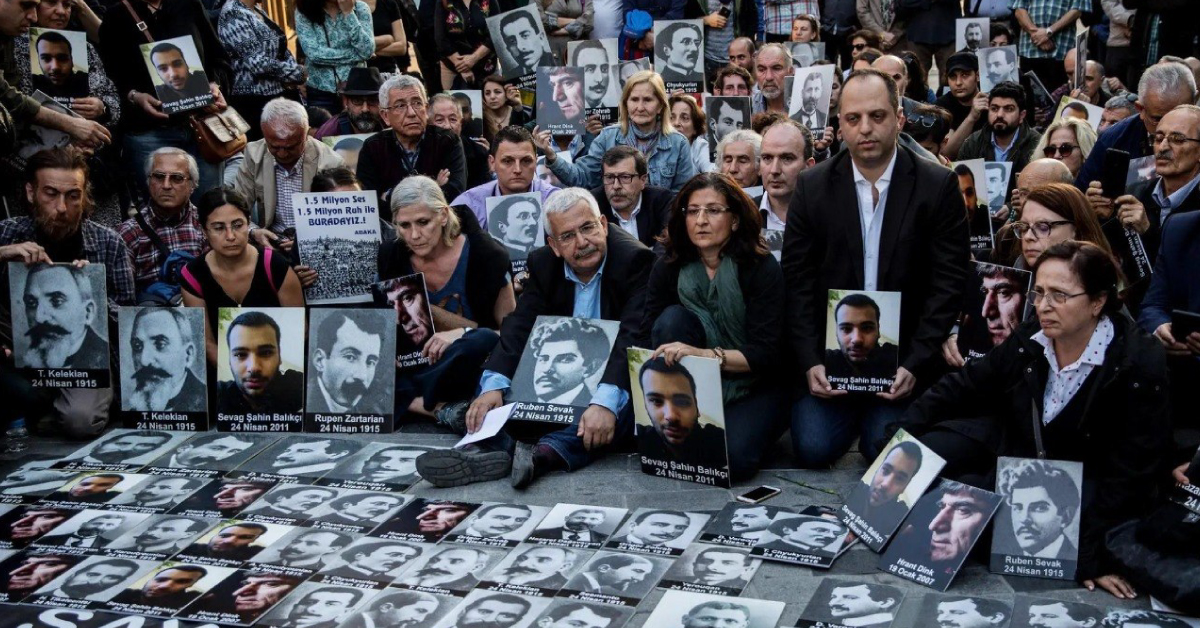
As previously, this year the Istanbul Governor’s Office again banned the April 24 commemoration events. Once again, the governor of Istanbul rejected the application submitted by the April 24 Commemoration Platform, without providing any justification.
Since 2010, the April 24 Commemoration Platform has organized remembrance events in Istanbul as well as in several other cities in Turkey. In 2020, these commemorative events were suspended due to the pandemic, and the ban has remained in place ever since. Turkish authorities continue to deem such gatherings “inappropriate”.
In reality, the authorities’ characterization of April 24 commemorative events as “inappropriate” reflects the state-sponsored policy of denial. It not only restricts remembrance events but also undermines the ability of civil society to exercise its right to free expression.
The first and foremost reason for the ban on commemoration events is Turkey’s policy of denial. Turkey has repeatedly maintained that it did not commit genocide. Recep Tayyip Erdoğan, President of the Republic of Turkey, has stated that countries recognizing the Armenian Genocide have failed to substantiate their claims with archival evidence. As an example, he mentioned France, arguing that it is not genuinely interested in the historical truth.
Therefore, the ban on events commemorating the Armenian Genocide in Turkey is directly linked to the state’s policy of denial. The permission granted for such commemorative events between 2010 and 2019 served a different purpose: it allowed Turkey to present itself to the international community as a country where freedom of expression is respected.
A second factor is related to foreign policy. April 24 commemorations regularly attract international attention. Permitting such events to take place in Turkey could be seen as signaling a shift away from the country’s policy of denial - something the Turkish authorities are careful to avoid.
In 2016, the German Bundestag adopted a resolution officially recognizing the Armenian Genocide. Turkey criticized the decision. Recep Tayyip Erdoğan described the resolution as baseless and warned that it would negatively affect bilateral relations. In response, Turkey recalled its ambassador from Berlin.
In 2019, Emmanuel Macron, the President of France announced that April 24 would be officially designated in France as a national day of remembrance for the Armenian Genocide. Turkey immediately condemned the move, once again reaffirming its denialist position. Ibrahim Kalın, spokesperson for the Turkish president at the time, described claims of the Armenian Genocide as a politically motivated falsehood lacking any legal basis and contradicting historical facts, asserting that such claims held no validity for Turkey.
In 2021, U.S. President Joe Biden used the term “genocide” for the first time. His statement sparked a strong reaction in Turkey. Turkish authorities condemned the declaration, describing it as a politicization of history. In response, Turkey temporarily recalled its ambassador to the United States for consultations.
Following statements by various countries recognizing and condemning the Armenian Genocide, Turkey has not only denied or criticized these declarations but has also, in some cases, applied economic and political pressure on those states. For instance, after France recognized the Armenian Genocide, diplomatic relations between Turkey and France became increasingly strained. Turkish business owners and members of parliament traveled to Paris in an effort to suspend commercial agreements and exert pressure on France. In this sense, Turkey’s policy of denial has at times translated into active political practice, and the restriction of commemorative events is often interpreted as part of effort to resist international pressure.