
“GEGHARD”
SCIENTIFIC ANALYTICAL
FOUNDATION


2026
2026
2026-02-18
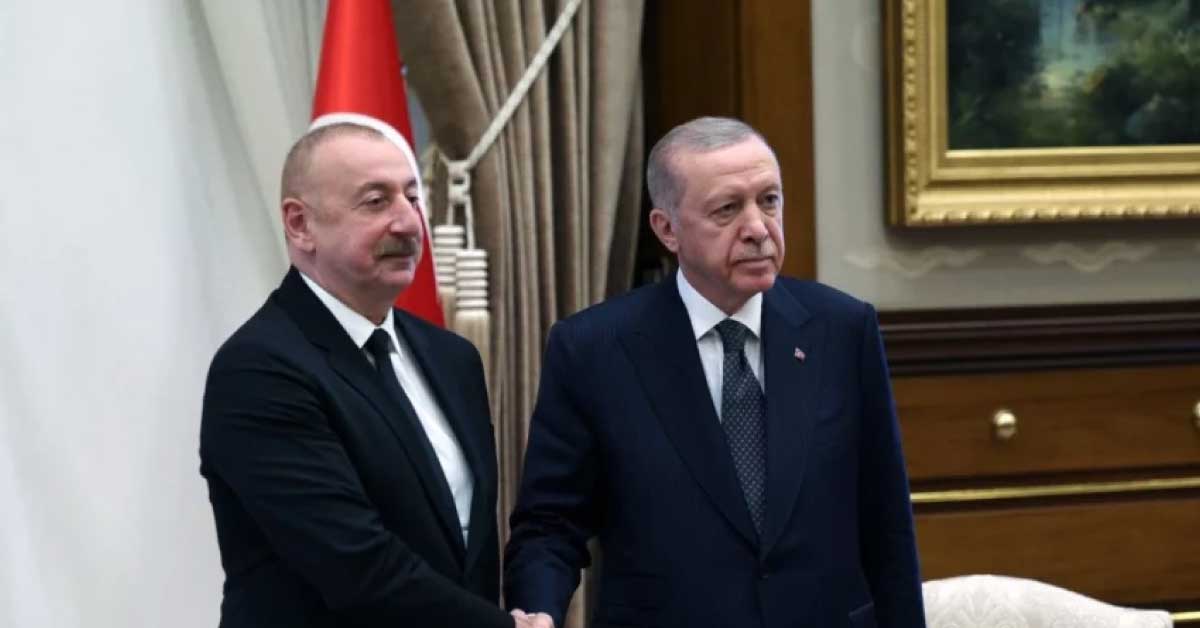
In 2024–2025, the contradictions between Ankara and Baku manifested in unique ways, despite the joint projects, signed documents, and seemingly harmonious foreign policy existing between the two countries.
Armenia and the Artsakh issue lie at the core of the problems between these two states, as it is within this context that it becomes noticeable where cooperation ends and contradictions begin. Although Turkey wields significant military-political influence over Azerbaijan, the latter possesses levers of its own that occasionally compel Turkey to reckon with Baku’s interests.
Thus, since the 1990s, Baku has consistently opposed Turkish approaches to establishing or normalizing relations with Armenia. By employing energy, financial, and demographic levers, Azerbaijan has derailed all normalization processes, compelling Turkey to keep the Armenia-Turkey border closed.
Initially, Turkey—which had recognized the independence of the Republic of Armenia—unilaterally closed its border with Armenia as early as 1993, framing it as a response to the “occupation of Azerbaijani territory.” Subsequently, discussions regarding the potential opening of the border and the normalization of relations were repeatedly interrupted due to Azerbaijan's rigid stance. In essence, Baku issued a demand to Ankara: “do not open the border with Armenia as long as the Karabakh issue remains unresolved.
In April 2009, during another round of Armenia-Turkey dialogue, mass protests broke out in Azerbaijani-populated areas of Turkey (particularly in Igdir, which is significantly “Azerbaijanized”) against Ankara’s intention to establish diplomatic relations and open the border with Armenia. The outcry calmed after the Turkish side assured that “Azerbaijan's interests and the Nagorno-Karabakh factor cannot be secondary in Armenian-Turkish negotiations.”
In 2011, on the eve of Turkish parliamentary elections, the Azerbaijani community in Kars opposed the installation of the “Statue of Humanity” in the city, which was dedicated to friendship and reconciliation with Armenia. As a result—fearing defeat in the elections and bowing to the demands of the local Azerbaijanis—Erdogan called the monument "monstrous" and ordered its demolition.
In their turn, Azerbaijani students at the Caucasus University in Kars, which is under Azerbaijani influence, organized a protest in 2019 against the visit of the Pan-Armenian Games organizing committee delegation, calling on the local Kurdish population to join them as well.
In June 2014, reports emerged of a decision by the Turkish President to open the Alican (Margara) border crossing (though these were later refuted), followed by the skirmishes of August 2014. On July 9, Azerbaijani armed forces carried out a subversive infiltration into the Armenian villages of Karvachar, killing civilians. On the same day, villages in the Tavush region were shelled, escalating into combat operations across various sections of the borders of Artsakh and Armenia. The fighting ended on August 10, when the presidents of Armenia, Russia, and Azerbaijan met in Sochi. Consequently, discussions regarding the opening of the Armenia-Turkey border were effectively sidelined.
Another notable incident occurred on July 1, 2022. On the very day the special representatives of Armenia and Turkey were scheduled to meet, Azerbaijan unilaterally closed its border with Turkey via Nakhijevan for two months, once again citing the pandemic as the reason.
By wielding the threat of regional destabilization, Azerbaijan successfully forced the cancellation of an Armenia-Turkey meeting scheduled for September 14, 2022, at the border. On September 13, Azerbaijan launched attack on Armenia’s eastern borders and occupied some Armenian territories stretching from Vardenis to Tegh. It is clear that Azerbaijan exerts political influence over Turkey by utilizing the threat of destabilizing the region.
On March 21, 2025, the land border between Armenia and Turkey was temporarily opened to allow Armenian humanitarian aid trucks to transit through Turkey to Syria. In this instance, Azerbaijan reacted sharply, voicing its dissatisfaction with the agreement reached between Ankara and Yerevan. Baku accused the Turkish side of betraying Azerbaijan and assisting pro-Western Armenia in order to gain the favor of the European Union and imperialist powers.
However, in the context of relations between Turkey and Azerbaijan, the personal relations between the two presidents are also pivotal for Turkey-Azerbaijan relations. Certain events demonstrate that this “brotherhood” is merely a convergence of interests. For instance, while Aliyev’s prestige in his own country is largely tied to being seen as Erdogan’s “brother,” Erdogan maintains power in Turkey, one could argue, partly due to Aliyev’s support.
Evidence of Baku’s direct and indirect interference in Turkey’s presidential elections is provided not only by experts, but also by Azerbaijani media, as well as by Azerbaijan-affiliated media outlets in Turkey, through propaganda publications aimed at facilitating Erdogan’s victory. These were accompanied not only by efforts to discredit Erdogan’s rivals, but also by attempts to mobilize the votes of Azerbaijanis in Turkey in favor of the incumbent president.
This best illustrates Aliyev’s personal influence over Erdogan and, consequently, over Turkey’s domestic and foreign policy. In the event of a clash of interests, it is evident that Baku would remind Ankara of its support.
It is noteworthy that here too regional interests are at the core—above all, relations with Armenia. In particular, the Azerbaijani press commented with deep concern on the pre-election slogan of Kemal Kılıçdaroglu, President Recep Tayyip Erdogan’s rival, according to which Asia would be connected to Europe via Turkey (based on the map he presented, bypassing Azerbaijan and using a “corridor” through Armenian territory). This was framed as the creation of threats for Baku should the opposition figure be elected. According to views, such approaches would imply a halt to Turkey’s support for Azerbaijan in regional matters and in its policy toward Armenia. By contrast, it was emphasized that Erdogan’s victory could further “free Aliyev’s hands,” giving him greater room to act with fewer constraints.
Beyond political leverage, Azerbaijan’s economic influence in Turkey is also substantial. Turkey is not only an importer of Azerbaijani energy resources but also a key transit hub for them. This sector provides Ankara with massive budgetary revenues and stimulates related economic activity. Baku capitalizes on this reality to exert influence over Ankara, using it as a means of applying pressure when necessary. For instance, in 2009—during the period of normalization in Armenia-Turkey relations—Azerbaijan nearly doubled the price of gas supplied to Turkey, threatening even higher tariffs for “ignoring Azerbaijan’s interests.”
Taking advantage of the crisis in the Turkish economy, Baku is also deploying its financial capabilities to increase its influence over Ankara. In the form of investments or external debt, the Azerbaijani manat is sometimes a lifeline for the Turkish economy. In 2022, for example, a certain stabilization of the Turkish currency was made possible thanks to a €1 billion deposit placed in the Central Bank of Turkey by the State Oil Fund of Azerbaijan (SOFAZ). To this, we can also add the extensive technical assistance that Azerbaijan has periodically provided to Turkey in mitigating the consequences of natural disasters.
Azerbaijan invests billions of dollars in Turkey, attempting to counter similar Turkish projects on its own territory through a policy of “soft power.” Given the superior scale of Azerbaijani investments, it is clear that these serve as vital instruments for Baku to exert influence. This is evidenced, for example, by the frequent reminders from Azerbaijan’s top leadership regarding their investment of over $20 billion in Turkey. Furthermore, such statements from Baku are often made by linking their substance to Armenia-Turkey relations.
It is worth noting that more than 3,000 Azerbaijani companies are involved in the Turkish economy. Among them, SOCAR is the largest foreign investor in Turkey, implementing strategic projects in the fields of oil refining, petrochemicals, and natural gas.
This and numerous other examples are clear evidence that Azerbaijan exerts significant political and economic influence over Turkey, which it utilizes according to its needs and opportunities. Taking advantage of Turkey's “weaknesses” and favorable circumstances, Baku advances its own interests in the region—primarily in its policy toward Armenia. Currently, Azerbaijan employs a financial, economic, demographic, and political toolkit toward Turkey, restricting Turkish approaches in the South Caucasus and in its relations with Armenia as much as possible.