
“GEGHARD”
SCIENTIFIC ANALYTICAL
FOUNDATION


2026
2026
2026-03-06
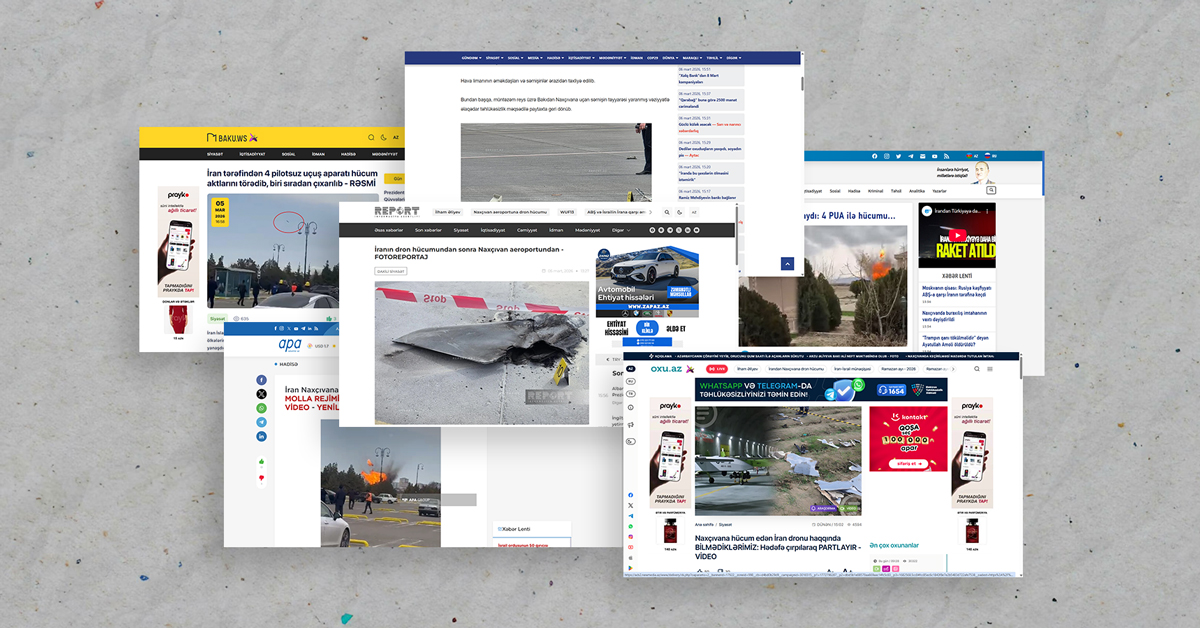
Against the backdrop of the deterioration of Azerbaijani–Iranian relations, on March 5 a new wave of Iranophobia gained momentum in Azerbaijan. In particular, this was reflected during the meeting of the Security Council chaired by the President of Azerbaijan, when Ilham Aliyev voiced threats and insulting remarks toward the Iranian side, using words such as “cowardly,” “dishonorable,” and “shameless.”
What has angered the President of Azerbaijan?…
On March 5, 2026, according to the Azerbaijani side, Iranian drones attacked the territory of Nakhichevan. It was reported that one of the UAVs fell in the territory of Nakhichevan International Airport, while another landed near a school in the village of Shakarabad. In his remarks, Ilham Aliyev described the incident as an act of terrorism and demanded that the Iranian leadership provide appropriate explanations and issue an apology. Moreover, he emphasized that the Armed Forces of Azerbaijan must be prepared for any operation. Aliyev went even further, attempting to sow seeds of separatism among the Turkic-speaking population living in Iran’s Azerbaijan Province.
“The independent state of Azerbaijan today is also a place of hope for many Azerbaijanis living in Iran”, - Ilham Aliyev said.
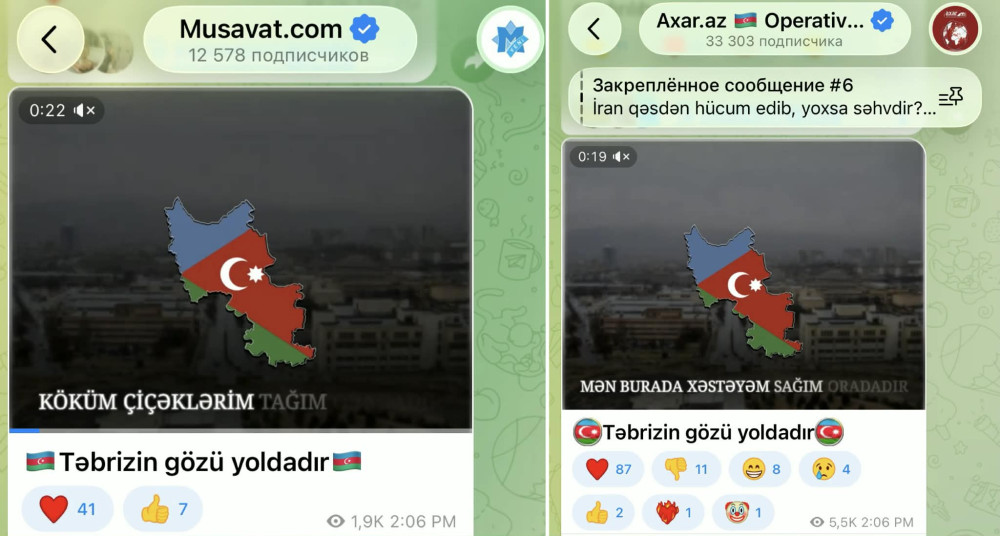
Parallelly, Azerbaijan has strengthened propaganda on Azerbaijani social media regarding territorial claims over Iran’s Azerbaijan province. In particular, Musavat.com and Axar.az. published posts on Telegram with slogan “Tabriz is waiting for its day”. In effect, these publications are Azerbaijan’s explicit territorial ambitions toward the Islamic Republic of Iran.
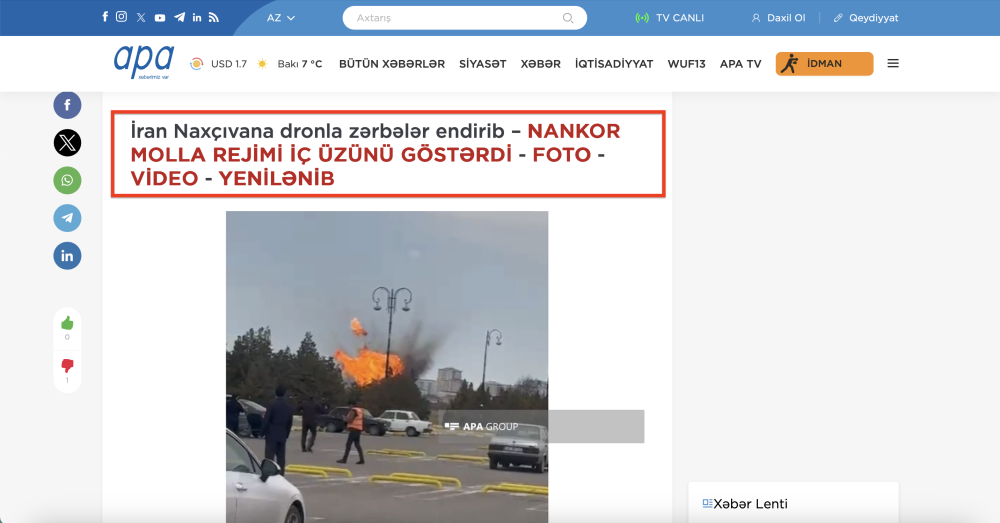
After Aliyev’s speech, aggressive and disrespectful statements against Iran quickly spread in the Azerbaijani media. APA news agency framed the incident with the headline: “The ungrateful mullah regime has shown its true face.”
The choice of wording used by the country’s leader in addressing Iran drew attention from both local and international media outlets.
The French newspaper Le Monde reported: “Azerbaijan vows retaliation after Iran's 'terrorist' drone strikes.” France24.com interpreted Aliyev’s remarks as: “Azerbaijan's President Aliyev vows retaliation after 'terrorist' drone strike blamed on Iran.” Meanwhile, the Australian outlet The Canberra Times, covering the events, wrote: “Azerbaijan army on alert after suspected Iran drone hit.”
But what had actually happened? The Azerbaijani side initially announced that two Iranian UAVs had fallen on its territory. This was followed by a statement from the Azerbaijani Ministry of Foreign Affairs, in which Baku demanded that Tehran provide appropriate explanations within a short timeframe and take the necessary measures to prevent the recurrence of similar incidents in the future.
“We strongly condemn these drone attacks launched from the territory of the Islamic Republic of Iran, which resulted in damage to the airport building and injuries of two civilians. This attack against the territory of the Republic of Azerbaijan constitutes a violation of the norms and principles of international law and serves to increase tensions in the region,” Azerbaijan’s Foreign Ministry statement says.
In connection with the incident, Iran’s Ambassador to Azerbaijan, Mojtaba Demirchilou, was summoned to the Ministry of Foreign Affairs of Azerbaijan, and the Iranian side was handed a note of protest. Several hours later, the Azerbaijani Ministry of Defense also issued a statement declaring that “the responsibility for the incident lies entirely with the Islamic Republic of Iran.” and that “these acts of attack will not go unanswered.”
Subsequently, publications titled “Iran carried out attacks with four unmanned aerial vehicles – official,” “The Ministry of Defense released information about an attack by four UAVs,” and “Iran carried out attacks with four UAVs – Ministry of Defense” appeared in the Azerbaijani press, all citing the Azerbaijani Ministry of Defense.
In reality, however, how many UAVs actually fell on the territory of Nakhichevan, and whether they were indeed Iranian, remains unknown.