
“GEGHARD”
SCIENTIFIC ANALYTICAL
FOUNDATION


2026
2026
2026-03-10
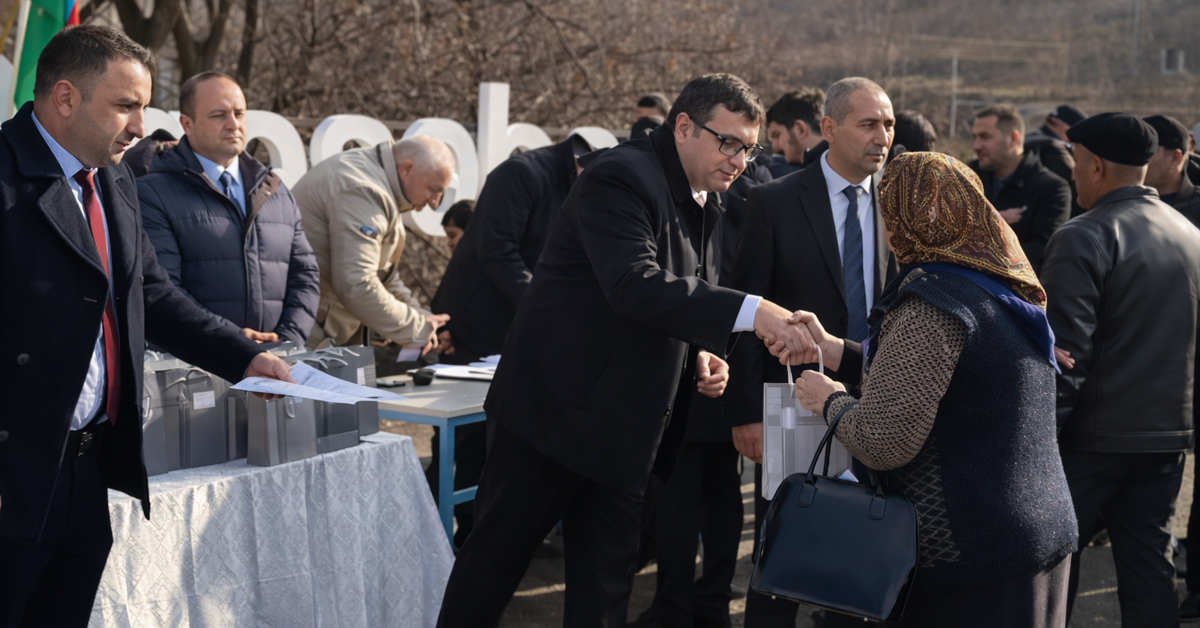
New groups of people being “resettled in Karabakh,” ceremonial handovers of apartment keys, photographs, applause, and yet another family with ‘satisfied’ looks—this is how Azerbaijani media inform about the resettlement process in Artsakh. But what is the reality…?”
A few days ago, during the session of Azerbaijan’s parliament, MP Razi Nurullayev made a noteworthy statement. He opposed the idea of the state building houses for those “returning to Karabakh,” instead proposing that favorable living conditions be created for them. According to the MP, people should build their homes themselves so that they become more attached to the land. From Nurullayev’s speech, it becomes clear that many of those who have “returned” later go back to Baku. In his view, implementing programs for the “reconstruction” of Artsakh solely through state projects is not sufficient; the private sector should also be allowed to operate outside the special economic zones.
Other MPs attempted to justify the investments and the government’s policy in the occupied territories. Even the Speaker of Azerbaijan’s parliament, Sahiba Gafarova, intervened, stating that no one has returned compulsory and that process is on a voluntary basis.
According to official Azerbaijani data, around 75,000 people have been resettled in Artsakh.
It is worth noting several important points regarding the “Return” program. A large proportion of those being resettled are elderly people. This suggests that even the provision of a free house or apartment and employment—such as jobs in sewing factories—is not particularly attractive for people, especially young families who have long lived, or have always lived, in Baku and other cities of Azerbaijan.
Moreover, people are often resettled in places where they have never lived before. For example, the settlements of Haterk, Karmir Shuka, and others in Artsakh were exclusively Armenian-populated even during the Soviet period.
The Azerbaijani authorities mention that around 15 billion dollars have been invested over the past 5–6 years for “reconstruction.” Most of this amount has been directed toward the implementation of large-scale infrastructure projects.
As an example, one can mention the construction of new settlements in the Araks valley region. This is largely demonstrative in nature, and these settlements do not become “living natural organisms.”
Baku continues to keep Artsakh as a closed zone, where the activities and freedom of movement are restricted. It is difficult to say how the Azerbaijanis who have actually moved to Artsakh live, since there is no free press in the country, and the information, photographs, and videos presented are filtered and propagandistic in nature. These processes are often also linked to corruption.
From the videos and posts that have leaked onto social media, it can be seen that alongside the resettlement process, Azerbaijan destroys Armenian cultural heritage and monuments.