
“GEGHARD”
SCIENTIFIC ANALYTICAL
FOUNDATION


2026
2026
2026-02-09
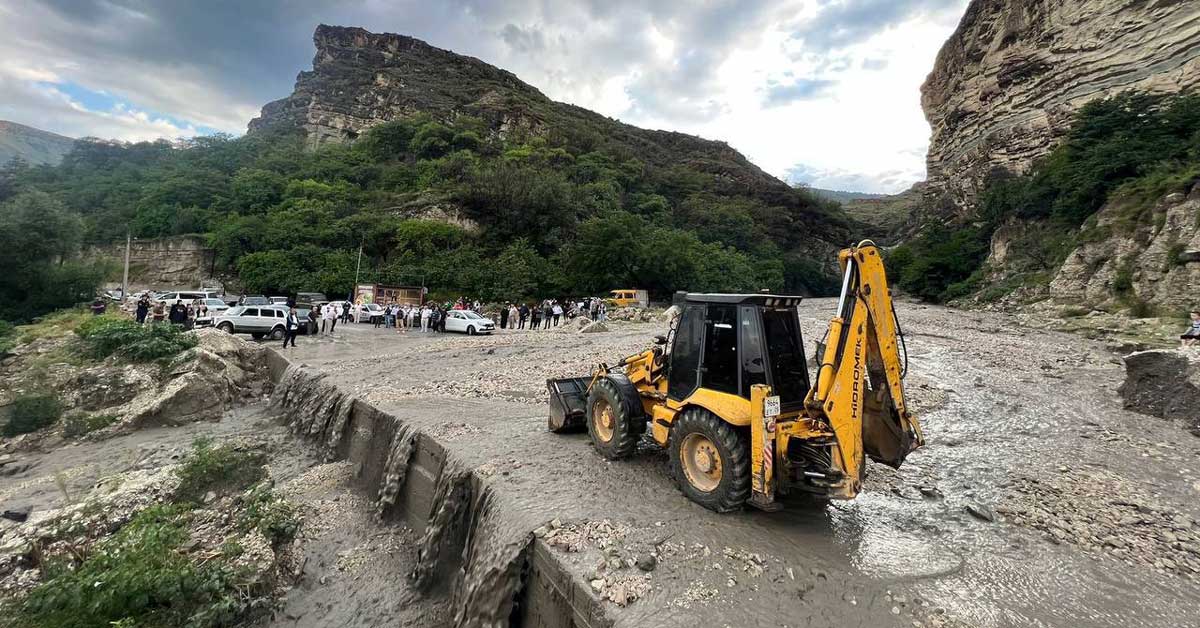
Disagreements over the state border between Russia and Azerbaijan resurfaced in December 2024 following an incident involving an Azerbaijani aircraft, and again in June 2025 amid tensions triggered by the arrest of a number of Azerbaijanis in Russia. Ignoring historical realities and facts, Azerbaijan has begun to voice claims over the city of Derbent in Dagestan and other territories adjacent to the Samur River.
According to Azerbaijan’s former minister of foreign affairs and political analyst Tofiq Zulfugarov, “the Azerbaijanis of Derbent are the oldest indigenous people of Russia.” With this statement, the former diplomat was responding to Russian nationalists who had called on Azerbaijanis to return to Azerbaijan. In Russian, the former foreign minister’s remarks were perceived as a territorial claim.
Another Azerbaijani political commentator, Azer Hasret, described Dagestan, Chechnya, and Ingushetia as “republics without Russians,” while calling Derbent an ancient Azerbaijani city and asserting that “Moscow should not determine the fate of the Caucasus and other territories.”
The Russian press, in turn, has focused on recalling the 1813 Treaty of Gulistan—under which Persia ceded Derbent to Russia—as well as on facts that the Azerbaijani state and the ethnonym “Azerbaijani” were artificially created by the Soviet Union. Although such contemporary debates are not taking place at a high level, their content is clearly shaped by political elites, and they reflect deep-rooted contradictions with their historical background.
The first decision on delimitation along the Samur River was adopted on January 20, 1921, with the establishment of the Dagestan Autonomous Soviet Socialist Republic within the RSFSR. Territorial disputes over a section of the Samur River—and disagreements over the use of its water resources—emerged in the 1950s. This section of the river has an important role in water supply and irrigation on the Russian side (the Samur–Derbent Canal) and on the Azerbaijani side (the Samur–Absheron Canal), serving Baku, Sumgait, and other settlements on the Absheron Peninsula. In 1954, part of the pastures of Azerbaijan’s Khachmaz district was transferred for a period of 30 years to the collective farms of Dagestan’s Magaramkent district. This agreement was extended in 1984 for an additional 20 years.
In 1957, a water-intake dam was built on the Samur–Divichinsk Canal. In the same year, at the request of the Azerbaijan SSR, the Soviet Union constructed the largest hydro complex on the Samur River in Dagestan’s Magaramkent district. It was designed to supply water to southern areas of Dagestan as well as a substantial part of Azerbaijan’s territory, from Zaqatala to the Absheron Peninsula.
As a result of the operation of the new water systems, forested areas received less irrigation. In the 1960s, a deterioration of the ecological situation and a decline in biodiversity were recorded in the Samur River area.
The distribution of the river’s water resources was regulated by a document of the USSR Ministry of Water Resources dated October 7, 1967. According to this document, 33.7% of the water was designated as an ecological flow, 16.7% was allocated for use by Dagestan, and 49.6% by Azerbaijan. However, by exercising control over the water supply system, the Azerbaijani side at times used up to 90% of the water volume. In practice, this resulted in an unequal exchange of territory and water, which later became a source of renewed grievances.
After the collapse of the Soviet Union in 1991, the former administrative boundary became the state border between Russia and Azerbaijan, politically separating local Lezgin, Avar, and other communities. As a result, long-standing interethnic tensions—already deepening during the Soviet period—were compounded by the problem of unequal access to irrigation and drinking water. On the Azerbaijani side, Lezgins were subjected to forced “Azerbaijanization.” The Lezgin “Sadval” movement was designated as terrorist, its activists were imprisoned, and the use of the Lezgin language and its textbooks was banned. Any contact between “southern” and “northern” Lezgins was placed under surveillance by Azerbaijan’s security services. In Dagestan, meanwhile, the growing presence of Azerbaijanis in local administrative bodies pushed Lezgin interests to the background, including with regard to access to the water resources of the Samur River.
As of 2007, 5–10% of the border between Russia and Azerbaijan had not been demarcated. Disputed sections remain in the Balakan district (at the junction of the borders of Azerbaijan, Russia, and Georgia), in the forested area of Khachmaz, and near the mouth of the Samur River. In 2008, Baku began the reconstruction of the Samur–Absheron hydro system, which led to increased water extraction from the river and a disruption of the ecological balance.
In 2009, Russia’s ambassador to Azerbaijan, Vasily Istratov, stated that disagreements over the use and protection of the Samur River were hindering the resolution of border demarcation between Azerbaijan and Russia. The problem was largely due to the Azerbaijani side’s use of most of the river’s water, which deprived residents of Dagestan of the opportunity to irrigate their gardens.
As a result of long negotiations, on September 3, 2010, an agreement titled “On Cooperation in the Field of Efficient Use and Protection of the Water Resources of the Transboundary Samur River” was signed between Azerbaijan and Russia in Baku. Under this agreement, 30.5% of the water was designated as an environmental flow, while the remaining portion was to be shared equally between the parties. A joint commission was established with the goal of resolving all issues related to the distribution of the river's water resources in a fair manner, consistent with international practice. In subsequent years, this commission held regular meetings to discuss the distribution and monitoring of water resources, the joint operation of the Samur hydro-system, and other matters. Following these discussions, protocols regarding future activities were signed.
On the same day, a treaty regarding the state border between Russia and Azerbaijan was also signed in Baku. With this document, Russia essentially became the first country with which Azerbaijan signed a formal state border agreement. It was announced that no border disputes remained and that the agreement served the interests of the people of Dagestan. However, the core provisions of the document became apparent only when demarcation work began in 2013, catching local residents by surprise. It was revealed that the treaty moved the border from the right bank of the Samur River to the center. Consequently, the Lezgin villages of Khrakh-Uba and Uryan-Uba in the Magaramkent district of Dagestan—with a population of 600 Russian citizens—were handed over to Azerbaijan.
Despite the local discontent, rallies, and protest demonstrations organized by the Lezgin organizations “Sadval” (which Azerbaijan has designated as a terrorist organization) and the “Federal Lezgin National and Cultural Autonomy” in various Russian cities, the terms of the agreement remained unchanged. As a result, the residents of the villages that ended up within Azerbaijani territory, disagreeing with the situation and rejecting offers to accept Azerbaijani citizenship, gradually relocated to Dagestan. Discussions, grievances voiced, and proposals made in the following years also proved to be ineffective.
The issue of equal water distribution has also not been resolved through agreements, even though the previous 19.6% allocation for Russia was formally replaced with 50%. Baku has continued to use the majority of the water resources, causing the fields and specially protected areas in Dagestan to dry out, and has even considered altering the river’s course to expand its territory and flood Lezgin villages on the Russian side.
The construction works carried out by the Azerbaijani side have exacerbated ecological problems, leading to protests by local residents, clashes with the police, arrests, and dissatisfaction with local authorities. In the Dagestani section, the reduced water flow has also intensified tensions among local communities, as the limited water supply is insufficient for both the city of Derbent and the surrounding villages.
Some argue that Russia has ceded territory to Azerbaijan in order to prioritize its own oil and gas interests. It is believed that, through a “Dagestani lands in exchange for energy resources” arrangement, Moscow prevented Azerbaijan from exporting gas to Europe in a way that would ignore Russian interests.
For Azerbaijan, the significance of the Samur River and the border demarcation along its course extends beyond ensuring water supply to the capital and the Absheron Peninsula or alleviating the country’s water security issues. It is also central to Baku’s policy of keeping the Lezgin population in the border regions under control and extending its influence into Azerbaijani-populated areas of neighboring countries.
Thus, Azerbaijan attempts to strengthen its position in the southern regions of Dagestan through soft power. A vivid evidence of this includes the naming of a street after Heydar Aliyev, the presence of portraits of both the father and son Aliyevs in schools alongside of Russian President Putin’s portrait, teaching with Azerbaijani textbooks, and other ideological activities among students. There are also reports that, in a context of inaction by Russian officials and their involvement in corrupt practices, Azerbaijani authorities are distributing Azerbaijani passports to the local population, making targeted investments, and carrying out propaganda activities.
The delimitation and demarcation work along the Samur River section of the border between Russia and Azerbaijan has not yet been completed. According to official statements, the process is being carried out in a constructive atmosphere of mutual understanding. However, in 2025, amid political disagreements between the two countries, renewed discussions of border and water-related issues indicate that the Azerbaijani side remains encouraged by the gains it secured under the 2010 agreement. With impunity, Baku continues to consistently advance its policy of expanding influence in Russia’s southern regions. To this end, it exploits the presence of Azerbaijani population in Dagestan and emphasizes its own importance within the broader context of geopolitical developments.