
“GEGHARD”
SCIENTIFIC ANALYTICAL
FOUNDATION


2026
2026
2026-02-04
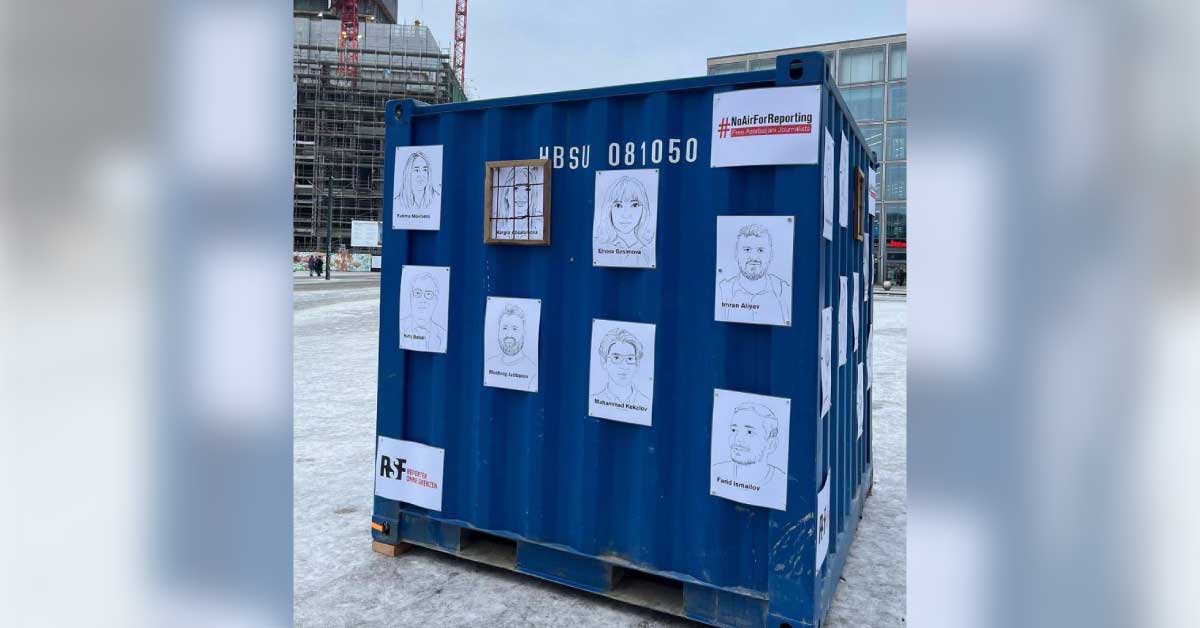
The international campaign against the ongoing repression of journalists in Azerbaijan is gaining new momentum. In particular, the international organization Reporters Without Borders (RSF) has recreated the prison conditions of journalists detained in Azerbaijani prisons in central areas of Berlin, Paris, and Bern, as part of an initiative aimed at drawing public attention to Azerbaijani media representatives who have been deprived of their freedom.
The statement of the organization says: “During her 800 days in prison, Sevinj Vagifgizi, editor-in-chief of the independent investigative outlet Abzas Media, has been mistreated by prison staff, denied sufficient access to food and water and her personal belongings have been withheld. Vagifgizi, the editor-in-chief of AbzasMedia, was transferred after 675 days to a remote and inaccessible prison in order to further isolate her. She and 24 other independent Azerbaijani journalists are being detained because of their critical reporting.”
Alena Shturuj, RSF’s advisor for Eastern Europe, stated that independent journalists in Azerbaijan’s inhumane prisons are forced to endure for reporting critically on the regime. “With this action, which recreates detention conditions, we make the systematic suppression of the press in Azerbaijan visible and remind the world that these media professionals defend the right to information and freedom of expression even behind bars. We call on democratic governments worldwide to increase pressure on the Azerbaijani authorities and President Aliyev,” she added.
This international organization notes that, as an authoritarian oil state, Azerbaijan has become an important strategic energy partner for Germany and the European Union. Over the years, Azerbaijani authorities have achieved significant lobbying successes in several EU member states, including among members of the German Bundestag. Since January 2026, Azerbaijan has been exporting natural gas to Germany.
This means that the West prefers to maintain its strategic energy partnership even when individuals holding opposition views in Azerbaijan are systematically persecuted, silenced, or arrested and isolated.
Representatives of Reporters Without Borders have also raised concerns about deeply rooted corruption in Azerbaijan, noting that it is reflected in prison conditions as well. As an example, they refer to detained journalist Nargiz Absalamova, emphasizing that doctors sometimes charge up to three times the usual price for medicines and medical services.
Journalists’ communication with the outside world is strictly restricted. Prison administration forces them to stop writing about prison conditions. Despite threats and punishments, journalists continue to send open letters from prisons to the public, describing the existing situation and the violations of their rights in detention facilities.
A similar protest also took place in the German city of Passau. Portraits of journalists behind bars were displayed in the city’s central streets, alongside placards reading, “Journalists are held hostage by the Azerbaijani government.”
The initiative aims to draw the international community’s attention to freedom of speech and media in Azerbaijan while supporting imprisoned journalists. The campaign is expected to continue in other European cities as well.
On January 26, the international human rights organization Amnesty International appealed to Azerbaijani President Ilham Aliyev, demanding the immediate release of 12 imprisoned journalists from the independent Azerbaijani outlet Meydan TV and urgent medical assistance for at least three individuals having health problems. According to the organization, since December 2024, 12 journalists from Meydan TV and affiliated media platforms have been detained in Azerbaijan on unfounded charges. It mentions that “their arrests are revenge for their journalistic activities.” Criminal charges brought against two of the journalists are described as false and fabricated. All of them are charged under several articles, mainly smuggling. It should be noted that none of the arrested journalists admit the charges brought against them. They claim that they were detained at the behest of the authorities due to their work as journalists.
Another demonstration demanding the release of Azerbaijani political prisoners took place in front of the Parliamentary Assembly of the Council of Europe (PACE) building in Strasbourg. The event was organized by members of Azerbaijani civil society living abroad. During the demonstration, European institutions were urged to focus on values rather than “oil and gas diplomacy” in their relations with Azerbaijan and were called upon to release the political prisoners.
A few days ago, representatives of Azerbaijani civil society living abroad appealed to the Council of Europe, calling for the initiation of an additional joint procedure against Azerbaijan. With the slogan “End the repression in Azerbaijan,” the representatives demanded immediate intervention regarding the mass human rights violations in the country. Members of the campaign noted that Azerbaijan has ignored its obligations within the Council of Europe for decades, resulting in a record number of political prisoners and ongoing abuses in the legal system.
Ali Kerimli, the imprisoned president of Azerbaijan’s opposition Popular Front Party, has also appealed to U.S. Vice President J.D. Vance regarding the issue of political prisoners, in connection with the Vice President’s planned visit to Azerbaijan in February.
In his statement, Kerimli noted that repression in Azerbaijan has reached its peak, writing that “up to 340 social and political activists have been arrested for their political views, and the regime is attempting to destroy the free press, civil society, and the opposition in the country.”
According to updated data published by Azerbaijani human rights defenders in January of this year, there are 340 political prisoners in Azerbaijan. The updated list of political prisoners is divided into 12 categories, including: believers (192), members of opposition parties and civil society (45), journalists and bloggers (31), human rights defenders (8), activists from national minorities (5), anti-war activists (2), and others.
Despite some international pressure, Aliyev’s repressive policies continue to silence independent voices both inside Azerbaijan and abroad. Almost daily, new reports emerge of criminal cases being opened and arrests made against independent journalists and opposition figures. In 2025, Azerbaijani authorities initiated criminal proceedings against 24 individuals living abroad who had criticized their political activities. Local courts have already issued absentia sentences against a number of prominent Azerbaijani journalists and bloggers.