
“GEGHARD”
SCIENTIFIC ANALYTICAL
FOUNDATION


2026
2026
2026-01-07
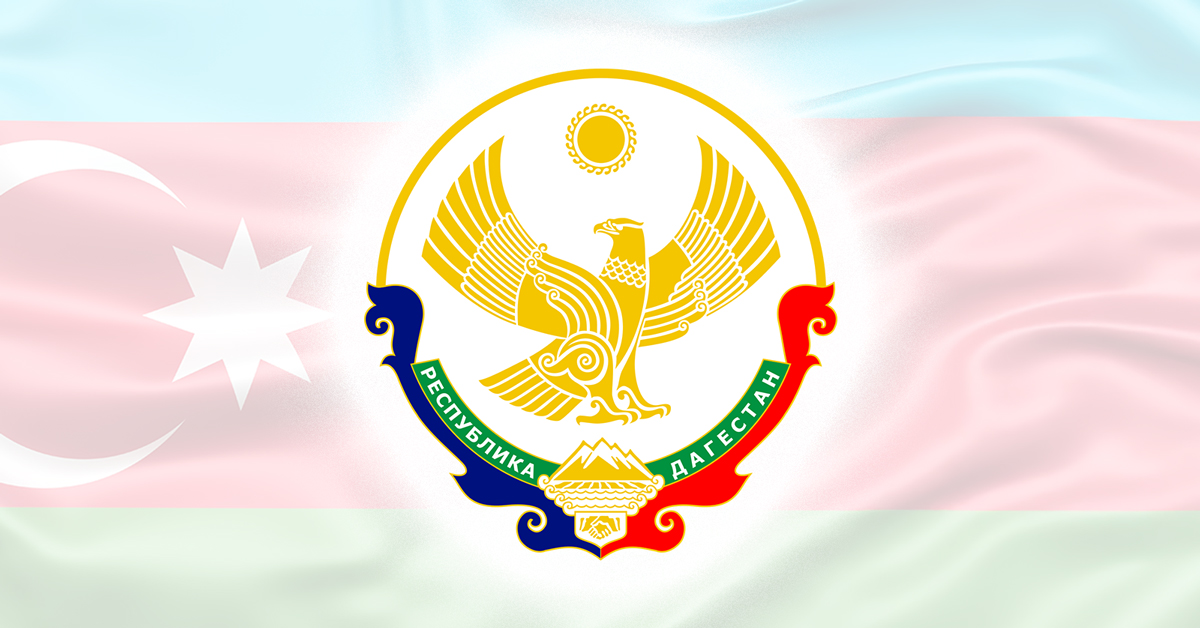
Azerbaijani interest toward the Republic of Dagestan of the Russian Federation have a history of more than a century. In 1917, the leaders of the Muslim (Tatar) faction of the Transcaucasian government repeatedly raised, at various levels, the issue of incorporating the Muslim state formations of the North Caucasus into Transcaucasia. On January 20, 1921, the Dagestan Autonomous Soviet Socialist Republic was established and was administratively separated from the Azerbaijan SSR along the Samur River.
Dagestan has also attracted the interest of Turkey, which has relied on the predominance of the Sunni Muslim population there, as well as Iran, the successor to Persian rule, which had ceded the territory to Russia under the 1813 Treaty of Gulistan. Azerbaijan, taking advantage of its proximity to Dagestan, the specific features of the local ethnic landscape, and its advantageous position in the management of water resources, has been able to become significantly involved in Dagestan’s social, economic, and political life.
Considering Turkey’s and Iran’s attention toward Dagestan, it can be assumed that Moscow apparently approves the expansion of Azerbaijani influence there as a counterbalance to the others and in pursuit of its own strategic objectives. Taking advantage of this, Baku shows territorial ambitions toward Dagestan’s southern areas, leveraging the presence of the local Azerbaijani population, the connections established during the Soviet era through free movement, as well as financial, economic, and cultural instruments.
Approximately 130,000 Azerbaijanis live in Dagestan. In the city of Derbent, located near the border with Azerbaijan and declared “Azerbaijani” by Baku, nearly one-third of the population are Azerbaijanis. These figures are, however, relative, since, as is well known, all Turkic-speaking residents of Soviet Dagestan were identified as Azerbaijanis.
Azerbaijanis in Dagestan also enjoy a number of advantages over other local ethnic groups. Their education is conducted using Azerbaijani textbooks, whereas in Azerbaijan, the Lezgins, Avars, and other groups are subject to an assimilatory policy by Baku, which deprives them of any form of autonomy.
According to various accounts, portraits of Azerbaijan’s former president Heydar Aliyev and the Azerbaijani flag can often be seen in Dagestani government offices. In different localities across Dagestan, the installation of monuments to Azerbaijani (or so-identified) figures, the establishment of institutions bearing their names, and the naming of streets after them, despite the discontent of indigenous peoples, are not isolated phenomena.
Appointments of Azerbaijanis, or of individuals favorably disposed toward Azerbaijan, to political and administrative offices in Dagestan is also a common routine. Employing their support, Baku frequently capitalizes on recurrent popular discontent and social hardships among the local population in Dagestan’s settlements. As a result, Dagestan’s Azerbaijanis often appear at the epicenter of interethnic and interreligious clashes.
According to representatives of the Lezgin community living in Dagestan, Azerbaijani investments pose a threat, as they create the impression within Dagestani society that Baku is more “generous” than Moscow. This perception becomes particularly pronounced in the context of large investments by Azerbaijan’s state and private sectors. It is therefore not accidental that Dagestani officials often view Azerbaijan as a desirable investor, either consciously disregarding the risks of “soft penetration” or being unable to resist orders from Moscow. Notably, calls inviting Azerbaijan to invest in Dagestan are also voiced by non-Azerbaijani officials. As a result of Baku’s policy, the current head of Dagestan, Sergey Melikov, who is ethnically Lezgin, has declared that Dagestan is “the home of Azerbaijanis and that they are an indigenous people there.”
In 2012, Dagestan’s deputy prime minister Rizvan Kazimagomedov stated that the republic was interested in expanding ties with Azerbaijan, also providing information on opportunities for broadening cooperation and investment across various economic sectors in Dagestan.
Another noteworthy example is the “confession” of Zeynula Gurbanov, an Azerbaijani entrepreneur and deputy head of the Dagestan Agency for Entrepreneurship and Investments. In 2016, during an event in Baku dedicated to the Days of Dagestan, he emphasized that Azerbaijan and Russia, beyond the oil sector, needed development in other areas as well. According to him, the role of small and medium-sized businesses is crucial in this regard, and “now is the ideal time for Azerbaijani entrepreneurs to establish enterprises in Dagestan.” Gurbanov proposed focusing on the construction of greenhouse facilities and the development of vegetable cultivation. In effect, he was offering institutional backing, including assurances of preferential access and favorable conditions. As Gurbanov stated, “Azerbaijani entrepreneurs will find support here, and I am ready to do everything to assist Azerbaijani businesspeople who invest in Dagestan.
To promote the development of tourism on both sides, it was proposed to introduce a visa-free entry regime with a 72-hour limit. The same issue was also discussed in 2020; however, citing the outbreak of the coronavirus pandemic, the Azerbaijani side closed its land borders (they remain closed to this day) thereby obstructing contacts between kindred Lezgins and others living along opposite parts of the border.
Instead, cultural ties and discussions about economic interests between Azerbaijani and Dagestani state and business circles have become more active. In 2020, the Azerbaijani manufacturing and trading company Karvan-L began developing a concept for a new residential district in the city of Derbent and the “Mother’s Tear” mosque. The agreement for the project’s implementation was signed by the Chair of the Federation Council of the Russian Federation, Valentina Matviyenko, and Azerbaijan’s First Vice President, Mehriban Aliyeva. Subsequently, at another meeting held in 2025, the Dagestani leadership invited Azerbaijani entrepreneurs from the construction sector to visit Dagestan in 2026 to explore local production capacities.
As a result of political decisions, Azerbaijan has been declared Dagestan’s principal trade and economic partner. Within the framework of Azerbaijan–Dagestan relations, priority areas include industry (especially agriculture), logistics (the “North–South” corridor and energy resources), and culture. However, due to Baku’s deliberate policy of large-scale water extraction from the Samur River and the resulting deprivation of local communities of water resources, much of the agricultural land in southern Dagestan remains uncultivated. Instead, under the guise of agricultural projects, Azerbaijani investors are gradually “appropriating” hundreds of hectares of land.
In 2014, Azerbaijani companies in the agricultural sector signed agreements with the Dagestani side on the sale of Azerbaijani products in Dagestan, as well as on the construction of a 240,000-square-meter plastic greenhouse, a fish farm, a fish canning plant, and a smoking facility. The Azerbaijani ATA holding allocated 1 billion rubles (approximately 27 million US dollars) for the renovation of infrastructure and the construction of new sports facilities in Derbent. In 2020, the Azerbaijani company Karvan-L began building a fish farming center in Derbent named “Golden Fish,” with an investment of 3 million US dollars.
In 2024, the Russian Agricultural Center of Dagestan and the Azerbaijani company ISFA signed a cooperation agreement in the field of horticulture. The agreement stipulates the establishment in Dagestan of a large fruit nursery, financed by Azerbaijani investors, and the development of orchards on 53 hectares. The new nursery will cultivate seedlings of cherry, plum, nectarine, peach, and olive. ISFA also signed a corresponding agreement with the Dagestani company S.R.Plast on the establishment of processing facilities in the Derbent area.
Under a separate agreement, in the first phase in 2025, ISFA will establish an olive orchard covering 100 hectares in the Derbent area of Dagestan, using 165,000 seedlings grown at the agricultural experimental park in Yevlakh. The company is also responsible for installing the orchard’s irrigation system. In the second phase, the company will construct an olive oil processing plant with a production capacity of 100 tons per day.
Dagestan is also of interest to Azerbaijan due to its logistical significance. Logistic infrastructures are being established there not only for Russian and Azerbaijani products but also for the transit of cargo from Iran and Turkey. In 2024, the first Azerbaijani-Dagestani transport and agricultural logistics center was established in the city of Derbent, containing cold storage facilities for the preservation of agricultural products and a packaging system. Thanks to this, local farmers have gained the opportunity to store their products.
The branch of the "North-South" International Transport Corridor passing through Azerbaijan and Dagestan is currently being developed through the joint efforts of Baku and Makhachkala. To expand transit capacities, there are plans to modernize the Samur railway checkpoint by 2030. Azerbaijan is also improving its road infrastructure leading to the Russian border. A 150-kilometer section of the Baku-Russian border toll highway has already been opened. By 2026, the reconstruction of the Yarag-Kazmalyar checkpoint on the Russian-Azerbaijani border is expected to be completed; it will feature 10 traffic lanes. Contracts for the design and construction of the Tagirkent-Kazmalyar and Novo-Filya checkpoints are scheduled to be signed by the end of 2025. According to Azerbaijan's strategic plans, this region is also viewed as a vital route for the export of energy resources.
In sum, Azerbaijan has been working toward "penetrating" Dagestan for years, opening agricultural processing plants and enterprises while encouraging its investors through the provision of preferential loans. Through proactive behavior across various sectors, the use of "carrot and stick" methods to exert influence over the local population, and the financing of large-scale projects, Baku demonstrates an ambition to earn the status of a "reliable partner" among Dagestani society. Furthermore, Azerbaijan periodically promotes the false, pseudo-scientific thesis claiming that Derbent is an ancient Azerbaijani city. In fact, Baku seeks to further strengthen its positions in Dagestan through "soft power," utilizing the ethnic community referred to as Azerbaijanis in Dagestan for its political interests when necessary.