
“GEGHARD”
SCIENTIFIC ANALYTICAL
FOUNDATION


2026
2026
2026-06-30
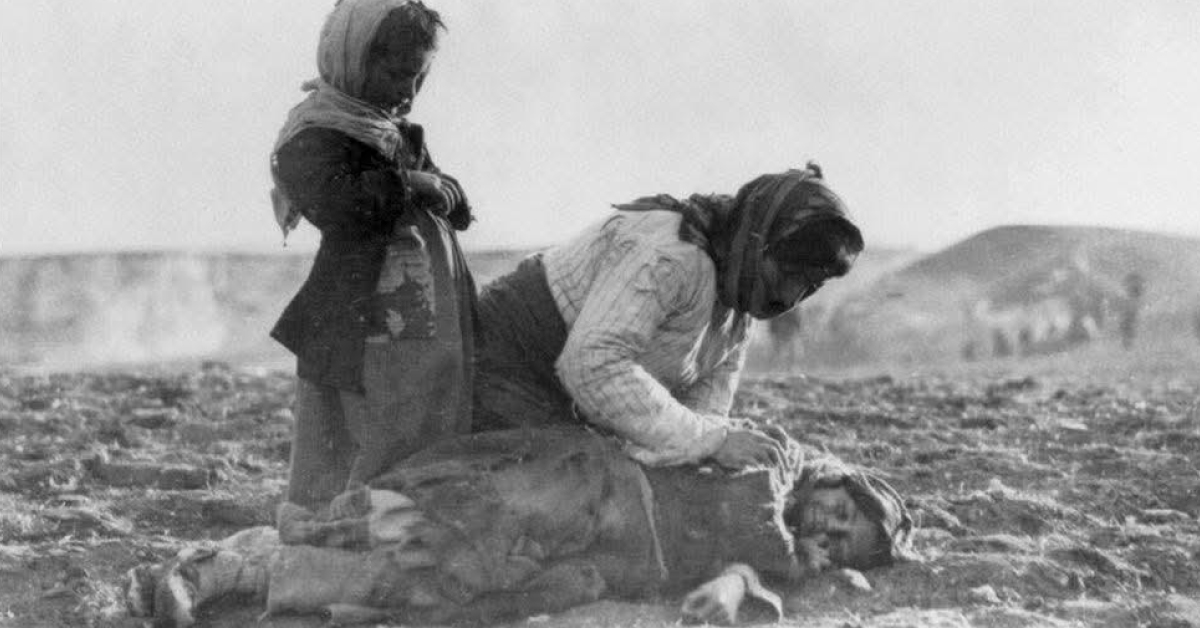
On June 28, the Israeli government unanimously adopted a decision to recognize the Armenian Genocide.
A few days earlier, Israel’s Foreign Minister Gideon Sa’ar wrote on his X account, referring to the resolution recognizing the Armenian Genocide: “Recognizing the genocide perpetrated against the Armenian people in the final years of the Ottoman Empire is both a moral and historical duty. We must also firmly condemn any denial, minimization, or distortion of the historical truth.”
“Despite the extensive and unambiguous historical documentation, the Armenian Genocide remains to this day the subject of an institutionalized campaign of denial and minimization, including a manipulative rewriting of history books, mainly by Turkey,” the Foreign Ministry said.
Israel’s “moral duty” and relations with Turkey
The issue of recognizing or not recognizing the Armenian Genocide has a long history in Israeli politics. The question of non-recognition by a people who survived the Holocaust has been a subject of debate across various segments of Israeli society. However, the failure to formally recognize has been driven not only by Israel’s strategic interests, including its relations with Turkey.
About a year before Sa’ar’s statement, on August 27, 2025, Israeli Prime Minister Benjamin Netanyahu addressed a question on Patrick Bet-David’s podcast about why Israel does not recognize the Armenian Genocide. The Prime Minister replied, “I just did.” Turkey immediately responded to Netanyahu’s statement, accusing him of “exploiting past tragedies for political purposes.”
The issue of recognizing the Armenian Genocide has been especially politicized over the past 15 years in the context of escalating Israel–Turkey relations. On several occasions, the issue of recognition was raised in the Knesset. Israeli politicians have spoken about the need for recognition, but the issue has never been formally adopted, and the government has consistently opposed it.
The statement by Israel’s Foreign Ministry comes against the backdrop of strained Israel–Turkey political relations, which are currently at their lowest point. The two sides hold opposing positions on the war in Gaza, the war against Iran, as well as developments in Syria, Lebanon, and a range of other political issues. At the same time, despite these tensions, Israel has still been receiving oil from Azerbaijan through Turkey’s Ceyhan port, although Turkish President Recep Tayyip Erdoğan has denied this.
It should also be emphasized that this recognition initiative is taking place amid rather cold Armenia–Israel relations. Israeli arms supplies to Azerbaijan, which were used by Baku during the 2020–2023 period in the capture of Artsakh and in attacks on Armenia’s borders, have negatively affected Armenia–Israel relations. In 2024, Armenia officially recognized the State of Palestine, a decision that drew strong criticism and negative reactions in Israel.
Reasons for non-recognition
Israel’s strategic relations with Turkey and Azerbaijan are considered the main drivers of its “pragmatic” position. During the 1950s, in the context of hostile relations with the Arab world, Israel has sought to build close ties with countries such as Turkey and Iran in order to reduce its international isolation. Turkey and Israel have maintained close relations for decades across political, economic, and other fields.
Other factors have also influenced Israel’s non-recognition of the Armenian Genocide, which have been studied in detail by Israeli researchers. These include the position of the Jewish community in Turkey, the Israeli lobby in the United States, and the so-called “ethnic competition” over preserving the Holocaust as a uniquely distinct case of genocide.
The factor of Azerbaijan and its position
Since the early 1990s, Israel and Azerbaijan have developed strategically significant transactional relations, which, according to Azerbaijani President Ilham Aliyev, resemble an iceberg whose only the tip is visible. Given its hostile relations with Iran, Israel has consistently developed ties with Azerbaijan, making significant contributions to equipping the Azerbaijani army with modern military technology and other resources.
As part of this arrangement, Azerbaijan has become a key oil supplier for Israel. According to a CNN report, during the 2026 war against Iran, Israel used Azerbaijani territory to carry out operations against Iran. In recent months Baku has attempted to act as a mediator between Israel and Turkey, as well as between Israel and Syria, in an effort to reach certain understandings.
Regarding Israel’s devastating war in Gaza, Azerbaijan found itself in a dual position: on the one hand, aligning with the position of the Islamic world and avoiding tensions in its relations with Turkey, and on the other hand, maintaining its close relations with Israel.
Azerbaijan’s position on the Armenian Genocide is one of denial. Azerbaijan describes the fact of the Armenian Genocide as “fabricated” and takes steps to prevent its recognition by other countries.
Possible consequences
This time, the recognition initiative in Israel comes from the executive branch rather than the legislature. In recent years, more voices within Israel have taken a harder line toward Turkey. Still, despite ongoing tensions and sharp rhetoric between Israel and Turkey, both sides have generally tried to avoid crossing the red lines that could lead to direct confrontation.
Azerbaijan’s Ministry of Foreign Affairs described the Israeli government’s decision as “concerning,” a “distortion of historical facts,” and an attempt to turn a complex historical issue into a political one, calling on Israel to reconsider it.
However, given the strategic importance of Israel–Azerbaijan relations for Baku, Azerbaijan is unlikely to seriously endanger its ties with Israel or launch a large-scale media campaign over the issue. The question now is: what can be expected from the Knesset?