
“GEGHARD”
SCIENTIFIC ANALYTICAL
FOUNDATION


2026
2026
2026-04-10
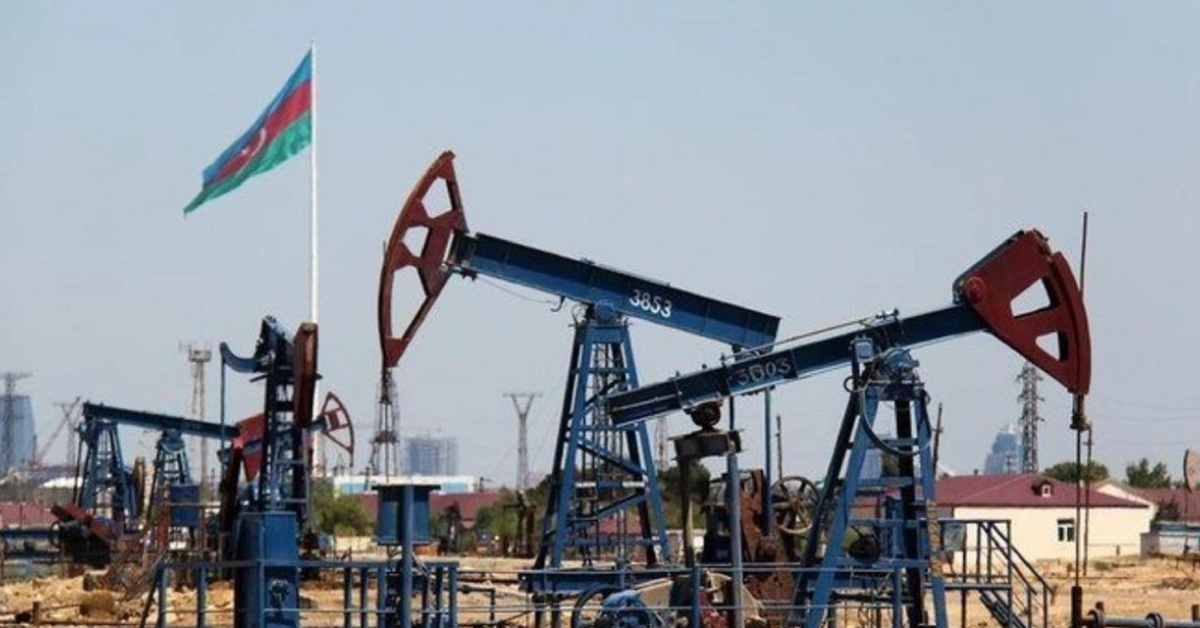
The sharp rise in global oil prices is driven by the conflict initiated by the United States and Israel in the Middle East, particularly the military operations against Iran that began on February 28. On March 9, the price of a barrel of Brent crude oil reached approximately 120 USD. Currently, the price still exceeds 100 USD per barrel. This conflict has also paralyzed oil exports through the strait of Hormuz, through which at least 25% of global oil supplies are transported. The confrontation with Iran disrupts energy supplies from major producers in the Middle East, leading to further price hikes. Azerbaijan’s economy, which is heavily dependent on oil and natural gas, benefits from this situation.
In Azerbaijan’s 2026 state budget, the average price of a barrel of oil was projected at 65 USD, while in the 2025 budget the average export price of a barrel of crude oil had been set at 70 USD. Against the backdrop of the conflict in the Middle East, the price of Azeri Light crude oil has been rising. On April 1, the price of Azerbaijani oil reached 132.35 USD per barrel, and by April 3 it had increased by 10.89 USD, or 8.3%, reaching 141.68 USD per barrel.
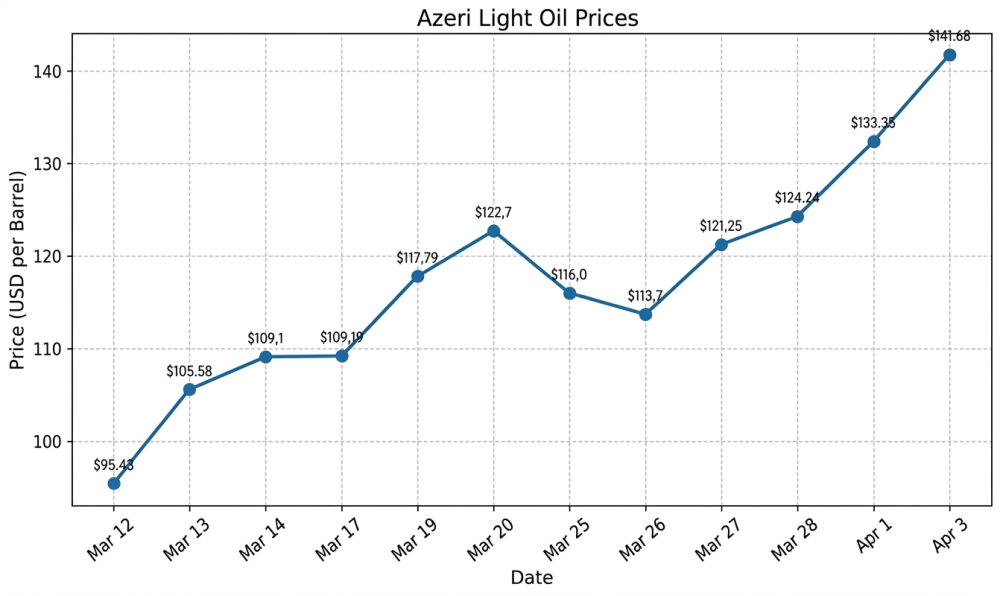
Thus, over the past month, since the outbreak of the armed conflict in the Middle East, the price of Azeri Light has reached its highest level, increasing by 70.8% (51.5 USD).
According to calculations by Azerbaijan’s Ministry of Finance, a 10 USD increase in oil prices could raise the country’s state budget revenues by about 400 million manats (235 million USD). Analysts note that such an increase could partially offset the consequences of declining oil production. According to estimates by the Dutch banking group ING Group, a sustained 10 USD increase in global oil prices could generate approximately 3 billion USD in additional annual export revenues for Azerbaijan and provide about 1.5 billion USD in additional state budget revenues from the energy sector. Analysts from the international credit rating agency Fitch Ratings also argue that a prolonged period of high oil prices caused by military conflict in the Middle East could lead to unexpected increases in Azerbaijan’s export and budget revenues.
At the opening of the 13th Global Baku Forum, however, Azerbaijani President Ilham Aliyev expressed concern about the rise in oil prices and warned of potential risks.
“We see that the unprecedented rise of oil and gas prices creates a lot of problems for consumers — and not only for consumers. If somebody thinks that this unbalanced price is good for those who produce and export oil, it's wrong,” Aliyev said.
Economist and founder of the “Open Azerbaijan” initiative, Zohrab Ismayil, believes that the rise in oil prices “creates additional opportunities for the Azerbaijani government, but time will show how long this will last.” “If the price increase lasts from one week to ten days, it will not represent significant income for Azerbaijan. However, if it continues for several months, the government will certainly receive much higher revenues than those projected in the state budget,” the Azerbaijani economist noted.
Ismayil emphasizes that even before the outbreak of the war, Azerbaijan was already on the verge of budgetary difficulties. “As long as prices remain high, Azerbaijan will be able to temporarily address part of its financial problems,” the economist notes. In his assessment, despite possible challenges, no serious economic problems are expected. If the losses and gains are compared, Azerbaijan will most likely benefit more from this situation.
According to Ilham Shaban, director of the Center for Oil Research, the rise in oil prices will also lead to an increase in the country’s economic revenues.
“A possibility is created to sell oil at a higher price. However, since this situation is unstable and temporary in nature, it is difficult to accurately assess future revenues and the impact on welfare,” Shaban said.
“The potential revenue boost would allow the government to allocate more funds to priority areas such as national security, reconstruction of liberated territories, and social protection programs,” said Vugar Bayramov, a member of the economic policy committee of the Azerbaijani Parliament.
Is the Baku–Tbilisi–Ceyhan oil pipeline a potential target?
An adviser to the commander of the Islamic Revolutionary Guard Corps (IRGC) stated that Tehran would target what he called the ‘enemy’s oil supply lines’ and prevent further oil exports from the region. Senior Arab sources told Middle East Eye that this statement raises serious concerns, as Iran could target the Baku–Tbilisi–Ceyhan pipeline. “The Iranian threat to strike 'enemy oil lines’ can only mean the BTC pipeline, as it is a main supplier of crude oil to Israel,” the source told MEE.
Same sources told MEE that Israel has been “carrying out its dirty work against Iran and the region through Azerbaijan,” adding that it has increased in recent years.
Concerns have grown further following drone strikes on the territory of Nakhichevan on March 5. Azerbaijan’s President Ilham Aliyev accused Iran of being behind the attacks, describing them as ‘terrorism’ and stating that the country’s armed forces must be prepared for any action. Baku also closed its embassy in Tehran and its consulate in Tabriz, evacuating all staff.
Following Aliyev’s harsh statements, Azerbaijan’s State Security Service announced that it had foiled terrorist attacks allegedly planned by Iran’s Islamic Revolutionary Guard Corps, including possible strikes on the Baku–Tbilisi–Ceyhan pipeline.
“In order to create panic among the population and damage Azerbaijan’s international reputation. The targets included the Baku–Tbilisi–Ceyhan oil pipeline, the Embassy of Israel in Azerbaijan, one of the leaders of the Mountain Jewish religious community, and the Ashkenazi Synagogue,” the statement said.
Ultimately, is it possible to protect the Baku–Tbilisi–Ceyhan pipeline from potential Iranian strikes? Vugar Seyidov, a reserve officer in Azerbaijan’s air defense forces, believes that in the event of an intensive attack it would not be possible. “We can defend ourselves against limited missile and drone attacks from Iran. But if missile strikes occur with the same intensity as the attacks directed at Israel, of course we would not be able to defend against them,” he said.
A possible attack on the Baku–Tbilisi–Ceyhan pipeline could also have serious consequences for Israel’s energy security, as well as for global oil markets. It is a major infrastructure project for Azerbaijan, Georgia, and Turkey, and any disruption could affect international flows and regional stability.
However, tensions between Baku and Tehran appear to be easing following a phone call between Ilham Aliyev and Iranian President Masoud Pezeshkian, as well as Azerbaijan’s delivery of humanitarian aid to Iran on two occasions.
Thus, rising oil prices may bring short-term economic benefits to Azerbaijan, but the situation also has risks. A deepening conflict in the Middle East could threaten strategic energy infrastructure, including the Baku–Tbilisi–Ceyhan pipeline. This situation presents both economic opportunities and security challenges for Azerbaijan, and it is already linked to the further development of the conflict surrounding Iran.