
“GEGHARD”
SCIENTIFIC ANALYTICAL
FOUNDATION


2026
2026
2026-03-25
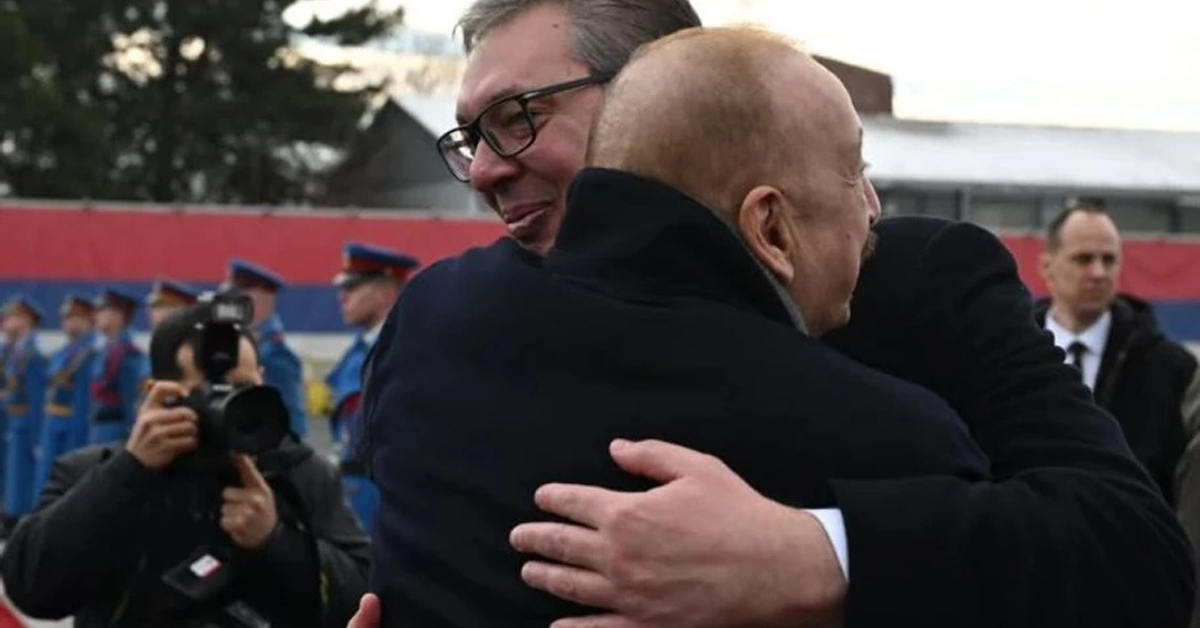
On January 26, 2026, The European Union (EU) adopted a decision to completely abandon Russian gas by 2027, and to develop a national programs for gas supply diversification by March 1, 2026, as well as the identification of potential challenges related to replacing Russian gas. At the same time, Turkey and several European countries show increased interest in Libyan gas. In this context, the February meeting between the presidents of Azerbaijan and Serbia is noteworthy. Ilham Aliyev’s statements about “new opportunities for cooperation” indicate Baku’s concern and its attempt—through Belgrade—to maintain its former significance as a “reliable supplier” for Europe.
In a situation where EU countries have decided to renounce the import of Russian-origin gas, alternative options to meet the continent’s demand are Azerbaijani, North African, Central Asian, and Middle Eastern gas. However, according to experts, Azerbaijan will not be able to adequately fulfill its obligations or significantly expand the volume of gas supplies.
On February 15, 2026, Ilham Aliyev and Aleksandar Vučić met in the capital of Serbia. The latter, as confirmed by the President of Azerbaijan, is a key figure in deepening the Serbia–Azerbaijan partnership. Having served as Serbia’s Minister of Defense, Prime Minister, and now President, Vučić has attached great importance to establishing and strengthening a strategic partnership with Baku, viewing it as an important source of Serbia’s energy security and economic development.
The issue that has “united” these two countries since 2008 has been the “violated territorial integrity”: in Serbia’s case, Kosovo, and in Azerbaijan’s case, Artsakh. In fact, Azerbaijan has opposed its “brotherly” Turkey on this matter and, to this day, has not recognized the independence of Kosovo, while Serbia congratulated Azerbaijan on its victory in the war against Artsakh.
Actually, the “friendship” between Belgrade and Baku emerged as “partners in fate” on issues of territorial integrity and sovereignty. On this basis, and thanks to mutual support in international platforms, their cooperation also included cultural and humanitarian contacts, and gradually evolved into security (military-technical) and economic cooperation that is mutually beneficial and expanding. After establishing full control over Artsakh, Azerbaijan began to be viewed in Serbia as an exemplary case that has “restored its territorial integrity.” During the February meeting, Aleksandar Vučić even noted that “Serbia has much to learn from him,” describing Ilham Aliyev as “the most popular person in Europe.”
For Serbia, which needs foreign investment, Azerbaijan’s financial “assistance” has been important. In 2011, Baku allocated €2 million for the reconstruction of Belgrade’s central Tashmajdan Park. Consequently, a three-meter statue of Heydar Aliyev, Serbia’s “new hero,” was erected in the park, overshadowing the monuments of Serbian heroes. The site has also become an important ceremonial location for official visits. With Azerbaijani funding, the Belgrade Mosque and the cultural center in Novi Pazar have also been renovated. In the city of Novi Sad, a church has been restored and a monument to the Azerbaijani composer Uzeyir Hajibeyov has been installed.
In 2012, Azerbaijan allocated €300 million for the development of Serbia. With the participation of Azerbaijani companies—particularly the construction company AzVirt, owned by the Aliyev family—and with co-financing from the Serbian government, roads and bridges were built, and various communication and infrastructure projects were implemented. One of Serbia’s most important infrastructure projects—the construction of a highway—was also completed by the Azerbaijani company. Serbia has also earned substantial revenues from the large-scale sale of military equipment to Azerbaijan.
Results of the February meeting
The Memorandum on the Establishment of the Azerbaijan–Serbia Strategic Partnership Council was signed in Belgrade on November 23, 2022. The President of Azerbaijan traveled to Belgrade on February 15, 2026, coinciding with Serbia’s Statehood Day, to participate in the first meeting of the Azerbaijan–Serbia Strategic Partnership Council. The meeting with the President of Serbia was followed by extended-format negotiations. As a result, a number of bilateral documents were signed, including agreements on cooperation in the field of food safety, the design, construction, and management of a gas-turbine power plant in Serbia, as well as cooperation in the fields of media and communications, culture, sports, and healthcare. A memorandum of understanding was also signed between the ministries of economy of the two countries. The discussions focused on energy infrastructure, defense cooperation, and the gas issue. Serbia, which mainly imports Russian gas, has not joined sanctions against Russia and has granted Russian companies monopolistic positions in its energy system. However, due to the EU’s decision, the country is now compelled to seek alternative supplies, including Azerbaijani gas. At the same time, this country, which aspires to EU membership, also expects financial support for the development of new energy infrastructure.
For its part, Baku is interested in preserving its loudly proclaimed reputation as a “guarantor of Europe’s energy security.” However, it is well known that, despite the decision to increase gas supply volumes, Azerbaijan, with its existing reserves and infrastructure, will not be able to significantly meet European demand. Instead, Azerbaijan, using its own resources and with the direct involvement of the state company SOCAR, has outlined several alternative projects intended to mask the gas shortage.
On February 15, following his meeting with the President of Azerbaijan, the President of Serbia announced that near the city of Kruševac, SOCAR will build a natural gas power plant (GTPP) with a capacity of 500 megawatts. According to him, it could become operational by 2029. Aleksandar Vučić noted that Ilham Aliyev will personally oversee the progress of the project. The Azerbaijani side announced that Serbia’s investment environment is attractive for Azerbaijan and expressed its willingness to make substantial investments in the country. Aliyev emphasized that the planned natural gas power plant in Serbia will be one of Azerbaijan’s largest investments in Europe.
According to the Azerbaijani side, by 2032, Azerbaijan’s energy sector will gain an additional eight gigawatts of capacity, most of which will be exported to Eastern Europe via the Black Sea power transmission cable. To achieve this, the Caspian Sea power transmission cable is expected to become operational in the early 2030s.
SOCAR also appears to have taken on the commitment to make Serbia a leading Balkan country in data processing and artificial intelligence. The company plans to expand the data center in Kruševac, making it the largest in Europe. Additionally, Serbia and Azerbaijan have agreed to launch direct flights between Baku and Belgrade starting in May 2026, in order to promote the tourism sector.
During the February meeting, the Presidents of Azerbaijan and Serbia also hinted at intentions to cooperate and implement projects in other sectors. Azerbaijan has promised to involve Serbia in regional economic initiatives (TRIPP).
While Baku views Belgrade as a long-term key partner in Europe, Belgrade is attempting to maintain and expand its political weight through Baku. It is important to note that Serbia’s relations—due to the Kosovo issue—are not entirely smooth, a fact that has been repeatedly reflected in Serbian authorities’ statements criticizing the European Union.
Unlike Brussels, Baku has consistently supported Belgrade on the issue of territorial integrity. In gratitude, Serbia has effectively opened its territory for Azerbaijan as a platform for expanding investment projects in the Balkan region. In return, with Baku’s investment, Serbia expects to achieve its strategic goal—modernizing its infrastructure and becoming an energy hub for Central Europe.
It is evident that Azerbaijan has established itself in Serbia through its financial and energy resources, turning its relationship with the country into a profitable lever using various forms of soft power. Following its approach, Baku is expected to continue “courting” the Serbian authorities and public through new investments, infrastructure initiatives, or promises. In this way, Azerbaijan will be able to maintain its significance in the European region and competitively position itself among alternative energy suppliers with the associated military and political expectations.