
“GEGHARD”
SCIENTIFIC ANALYTICAL
FOUNDATION


2026
2026
2026-03-17
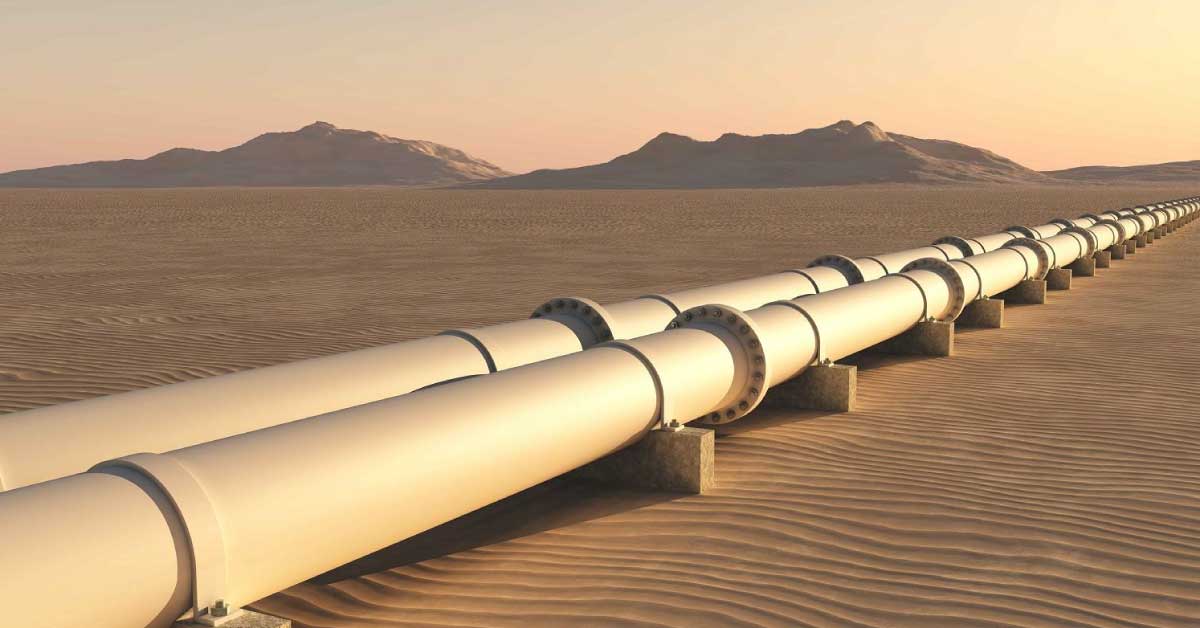
In February 2026, Azerbaijani media published concerns regarding developments in Libya, particularly the active interest of various countries in Libyan energy resources. Notably, an article published on one of the pro-government Azerbaijani websites underscores Baku’s worries about intentions in European countries and Turkey to replace Azerbaijani gas with Libyan gas.
The European Union has decided to completely phase out Russian gas by 2027. Under this decision, EU member states are required to halt imports of the Russian gas and, by March 1, 2026, develop national plans for diversifying gas supply, as well as identify potential challenges related to replacing Russian gas. Accordingly, alternative options considered to meet European countries’ gas demand include energy resources from Azerbaijan, North Africa, Central Asia, and the Middle East.
Currently, Azerbaijan supplies gas to 16 countries, including 10 member states of the European Union. Since January 2026, Germany and Austria have joined the SCPX–TANAP–TAP pipeline—originating in the Caspian Sea and reaching the shores of Italy—by signing 10-year contracts with SOCAR. In Azerbaijani discourse, this deal is presented as a significant success for Baku in establishing itself in Europe’s gas market. However, alternative views question Azerbaijan’s capacity to meet European demand, noting that it has already fallen behind on its commitments to deliver the promised volumes.
Azerbaijan has also acknowledged its inability to ensure the required supply volumes in the short term, confirming that new infrastructure and additional investments are needed to fully utilize the pipelines—something that neither Baku nor the European Union can provide within a short timeframe. At best, Azerbaijani gas volumes may increase starting from 2029, driven by investments of Turkish companies in Caspian fields and the development of new deposits with Turkish capital. In this regard, Azerbaijan and Turkey signed an agreement on January 5, 2026.
Key processes have already been launched around the Libyan alternative for replacing Russian gas by 2027. National Oil Corporation (NOC) of Libya has announced its intention to significantly expand oil production by 2027, encouraging international companies to return and invest in the country’s fields and energy infrastructure.
In January 2026, Tripoli had already concluded major agreements on gas supplies with France and the United States. Libya reached an agreement with TotalEnergies and ConocoPhillips to make a joint investment of $20 billion for offshore gas extraction. Earlier, Italy had also shown interest in purchasing large volumes of Libyan gas.
Libyan gas is connected to the European energy system through the Greenstream submarine pipeline. This 516-kilometer pipeline stretches from Libya to the island of Sicily. The system is operated by the Italian company Eni through its joint venture GreenStream BV. Given that there are no gas pipelines linking Libya to Turkey, Ankara is considering the option of exporting Libyan gas to Italy via the GreenStream route.
Turkey is currently implementing a number of oil and natural gas exploration projects in Libya. These are presented as part of a broader strategy to reduce dependence on external energy sources and as an element of Turkey’s long-term energy policy. Azerbaijani media note in this regard that the Libyan government has provided political support to Turkish initiatives, creating additional competitive advantages for Ankara. Baku also believes that this situation could lead to tensions between Turkey and European countries.
Alparslan Bayraktar, Minister of Energy and Natural Resources of Turkey, stated that Turkey considers the possibility of supplying Libyan gas to the Italian market, with volumes compensated by Azerbaijani gas through a swap mechanism. The year 2026 has been designated as the “Year of Energy Cooperation between Libya and Turkey,” and after a 17-year break, the two countries have signed an economic memorandum.
Essentially, being well aware of Azerbaijan’s sensitive approach to Libya’s oil and gas sector, the President of Turkey had already, in 2021, offered Ilham Aliyev the opportunity to participate in joint projects through the Turkish state company TPAO. According to Erdogan, Aliyev expressed satisfaction with the proposal, but no information is available regarding subsequent cooperation. Moreover, Baku, closely monitoring Libya’s oil and gas sector, attempted in 2025 to advance SOCAR’s involvement in the Libyan economy.
There is also discontent in Azerbaijani regarding the provision of the EU regulation that requires proof that gas is of non-Russian origin. Baku emphasizes that Russian gas reaches Europe through the “Turkish Stream” and is not related to the “Southern Gas Corridor” (SCPX) originating from Azerbaijan. Suspicious toward this requirement, Azerbaijan expresses its dissatisfaction particularly toward France, which, despite its disagreements with Russia, does not share the same stance as other European countries on renouncing Russian gas. Additionally, in recent years, economic issues have also played a role in the Baku–Paris “conflict.” France has favored Libyan gas over Azerbaijani supplies: in January 2026, new contracts were signed with the aim of increasing imports of Libyan gas, while continuing to receive Russian gas through Turkish pipelines.
In this context, Baku is concerned because, due to Paris’ consistent preference for phasing out Azerbaijani gas, demand for Azerbaijani gas in the EU is unlikely to grow in the coming years. Instead, in cooperation with Ankara, Libyan gas is expected to meet European demand sooner. Baku, which views Russian gas as a competitor to its own, is also worried about Ankara considering the possibility of swapping Libyan gas for Russian supplies.
However, according to the same Azerbaijani “concerned” sources, the TAP AG joint company announced that the exchange of Libyan and Azerbaijani gas currently is not under discussion. The company further affirmed that contracts are valid through 2045 and that existing regulations will remain unchanged.
Thus, Baku has several serious reasons for concern. First, it risks being sidelined in the EU’s diversification policy for gas imports, ceding its former position to Libya. Second, a reduced dependence on Azerbaijani gas may deprive it of the previous sense of impunity. This sense of impunity had enabled Azerbaijan to carry out ethnic cleansing and war crimes in Artsakh. Furthermore, European countries and organizations that consume Azerbaijani gas have largely failed to impose sanctions or respond appropriately to the widespread human rights violations and repressions in Azerbaijan.
Moreover, Baku is already suspected of assisting in circumventing the ban on Russian gas imports. Ankara’s policies are also a concern for Baku. Turkey is likewise interested in diversifying its energy economy and has been actively involved in efforts to significantly increase Libyan gas exports.
Therefore, upcoming agreements and practical steps related to Libyan gas are likely to make Azerbaijan even more irritated. Losing financial flows and the resulting weakening of economic and by extension, political leverage will compel Baku to seek new tools to exert pressure on Ankara and Brussels. In this context, cooperation with Washington becomes more probable, as only through such collaboration could Azerbaijani gas be positioned as a primary substitute for Russian gas.