
“GEGHARD”
SCIENTIFIC ANALYTICAL
FOUNDATION


2026
2026
2026-02-03
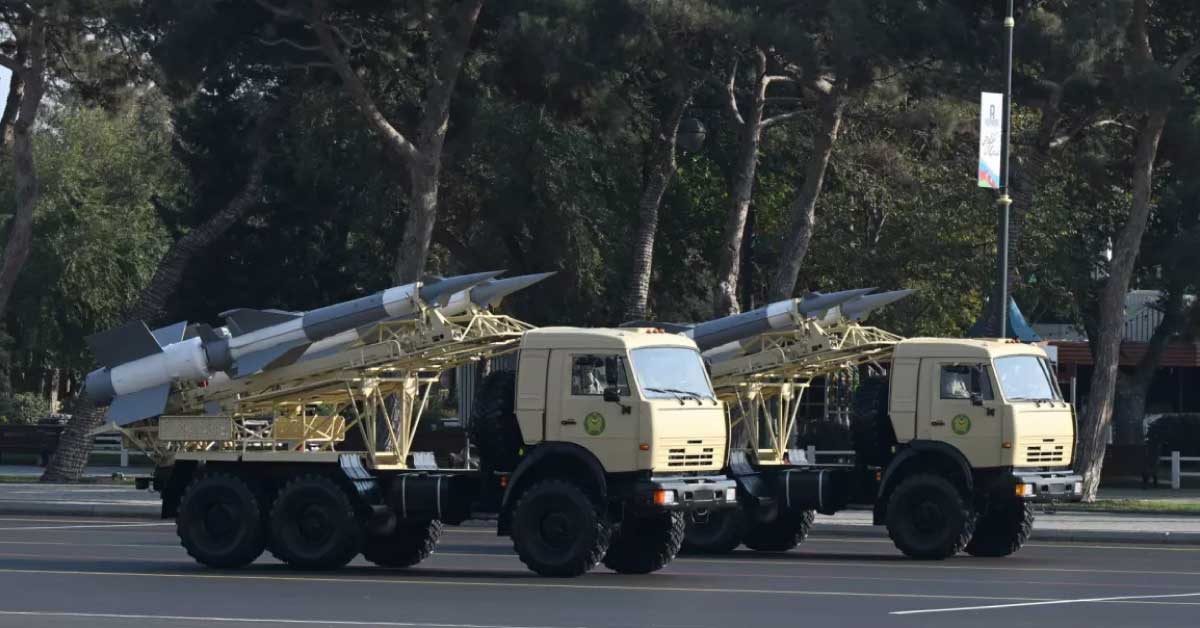
Azerbaijan continues the acquisition of new weapons from various partner countries. The latest additions to the arsenal of the Azerbaijani army in recent years were showcased during the military parade held in Baku on November 8, 2025. Overall, Azerbaijan displayed 39 units of special equipment and weapon systems, 53 air defense systems, 63 missile and artillery weapons, and 12 naval vessels, 55 aviation assets, five of which were supplied by Turkey. 5,000 Azerbaijani soldiers, 240 servicemen from the Turkish Armed Forces, and 120 servicemen from the Pakistani Armed Forces participated in the parade.
Advanced weapons at the parade: power demonstration or a military-political message?
According to international media, one of the main additions in armaments is the Chinese long-range HQ-9BE surface-to-air missile systems. The export variant of this weapon is designed to destroy aircraft, cruise missiles, and short-range ballistic missiles. The HQ-9BE is the latest export variant of China’s HQ-9 air defense system. It was first presented in February 2025 at the IDEX international defense exhibition held in Abu Dhabi. The system’s manufacturers, the Chinese companies Norinco and CATIC, presented it as an alternative competitor to the U.S. Patriot and the Russian S-400 systems. According to reports, Azerbaijan has become the fourth country—after Morocco, Pakistan, and Egypt—and the first among the former Soviet republics to acquire the HQ-9BE systems from China.
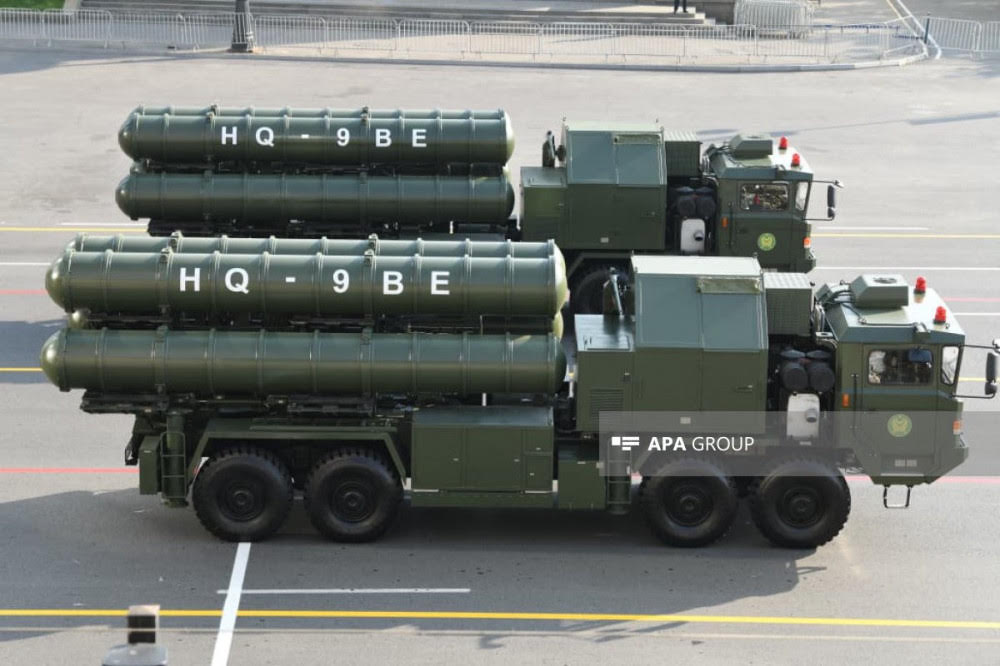
Chinese-manufactured HQ-9BE long-range air defense missile systems
In 2024, Azerbaijan purchased JF-17 Block III fighter jets jointly produced by China and Pakistan. On September 25, 2024, Pakistani JF-17C (Block III) fighters were presented to Azerbaijani President Ilham Aliyev in Baku.
According to Azerbaijani media, during the military parade the JF-17 multirole fighters took part in a demonstration flight. Prior to the parade, Azerbaijani media had reported that JF-17 Thunder fighter jets of the Pakistan Air Force, along with Pakistani servicemen, would also participate in the event. Nevertheless, it remains unclear whether the aircraft that performed the flights during the parade belonged to the Azerbaijani Armed Forces or to Pakistan.
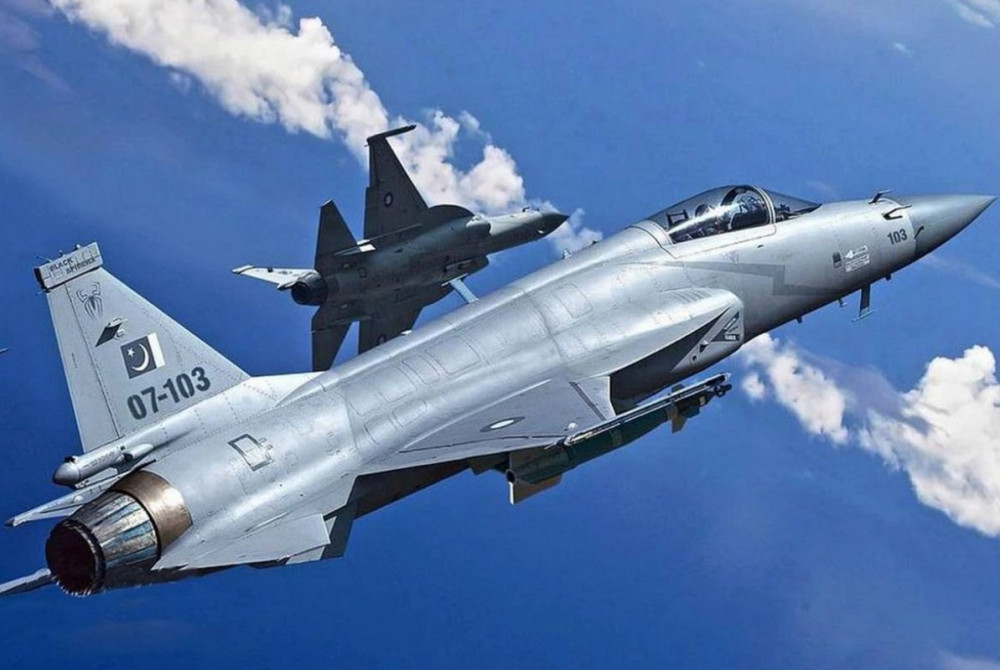
JF-17 Block III fighter jets jointly produced by China and Pakistan
In 2025, Azerbaijan and China signed a Comprehensive Strategic Partnership agreement covering the fields of energy, transport, education, and culture. China is also interested in Azerbaijan’s energy resources and “green energy” projects. At the same time, military cooperation between China and Pakistan plays a central role. Joint military exercises are held annually, while China supplies Pakistan with Hangor-class submarines and J-10C fighter jets, and also supports its defense production. The China–Pakistan military alliance strengthens Beijing’s position in the region, which is important for Baku.
One of the new additions to the arsenal of the Azerbaijani army is the Israeli-made Sea Breaker missile. Developed by Rafael Advanced Defense Systems, the Sea Breaker is a high-precision, fifth-generation system capable of striking surface and coastal targets at ranges of up to 300 kilometers, and a single missile is capable of destroying a small warship.
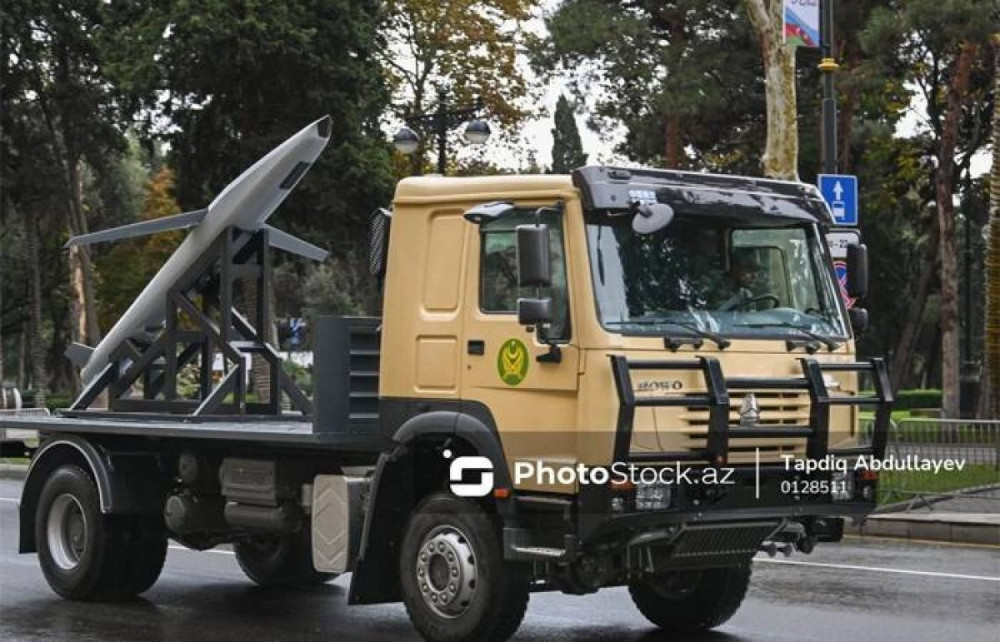
Israeli-made Sea Breaker missile
The purchase of Sea Breaker missiles by Baku, as indicated by Azerbaijani sources, can be viewed as a new capability that would enable the neutralization of potential threats to the country’s coastal infrastructure, energy platforms, and maritime lines of communication. In the Caspian region, Azerbaijan could apparently use the Sea Breaker and other new naval weapon systems against Iran or, less likely, against Russia.
The operational-tactical Predator Hawk (HOUK) missile system was displayed on a PULS chassis. The missiles are produced by the Israeli defense corporation Elbit Systems. According to the company, Predator Hawk is a high-precision guided missile system designed to destroy targets at long ranges, with an exceptional range of 50 to 300 kilometers. For nearly ten years, Azerbaijan has been acquiring missile systems from Elbit Systems. Azerbaijan has received EXTRA tactical missiles with a range of up to 200 kilometers, and later the Azerbaijani army acquired LORA missiles developed by Elbit Systems with a range of up to 400 kilometers. During the 44-day war, both of these missiles were used against Artsakh.
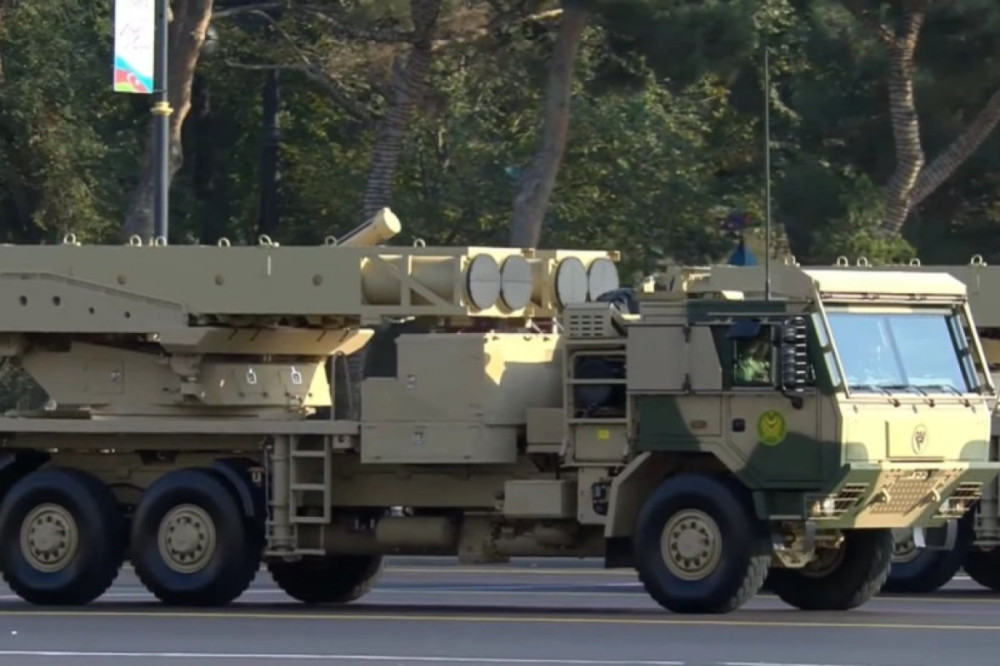
Israeli-made Predator Hawk (HOUK) missile system
The SkyStriker Block-4 system, also developed by the Israeli company Elbit Systems, was also showed at the military parade in Baku. SkyStriker is capable of precise tactical strikes from long distances. It can detect, hunt, and strike targets designated by the operator, ensuring a high level of precision.
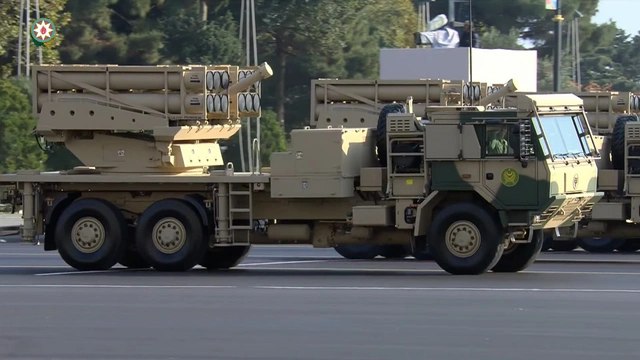
Israeli-made Sky Striker Block-4 system
The next Israeli munition on display is the loitering HERO-120, developed by UVision Air. Designed for land, naval, and aerial employment, the HERO-120 can be integrated onto armored vehicles, naval vessels, and rotary-wing platforms, such as combat helicopters. Intended for the protection of energy infrastructure in the Caspian Sea, the control of maritime lines of communication, and the deterrence of Iran’s naval forces, the HERO-120 allows Baku to rapidly neutralize threats without deploying large aviation or naval forces.
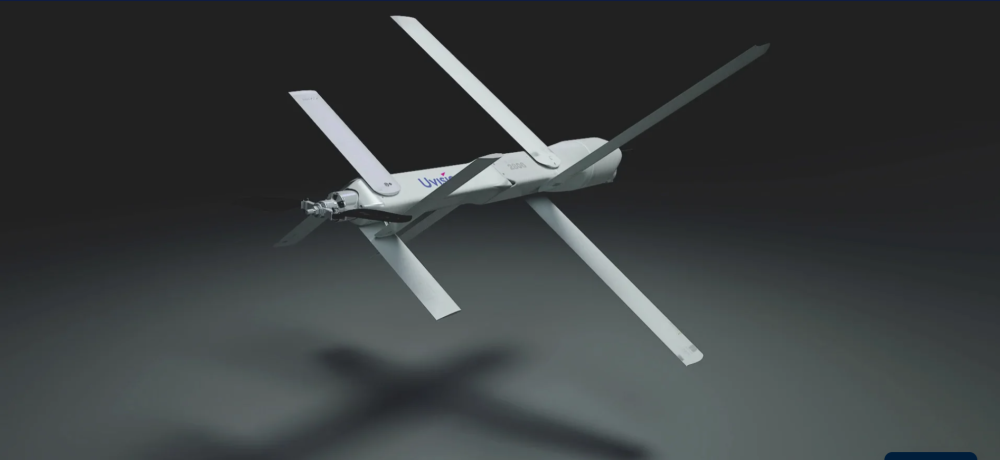
Israeli-made HERO-120 loitering munition
Among the exhibits of the parade held in Baku was also the Orbiter-5 tactical reconnaissance unmanned aerial vehicle, produced by the Israeli company Aeronautics. It was first unveiled in June 2023 at the Paris Air Show. Azerbaijan also possesses other variants of the Orbiter family in its arsenal, including the Orbiter-1KM, 2, 3, and 4.
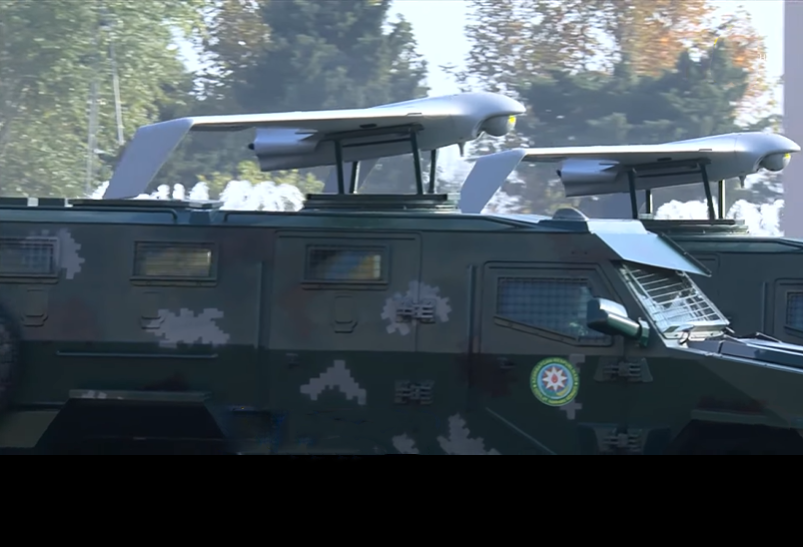
Israeli-made Orbiter-5 tactical reconnaissance unmanned aerial vehicle
One of the newest additions to Azerbaijan’s arsenal is the Serbian-made 155 mm NORA B-52 self-propelled artillery system. It should be noted that during the joint Azerbaijani–Serbian tactical military exercises held in October 2025, artillery units conducted live fire drills using the NORA B-52.
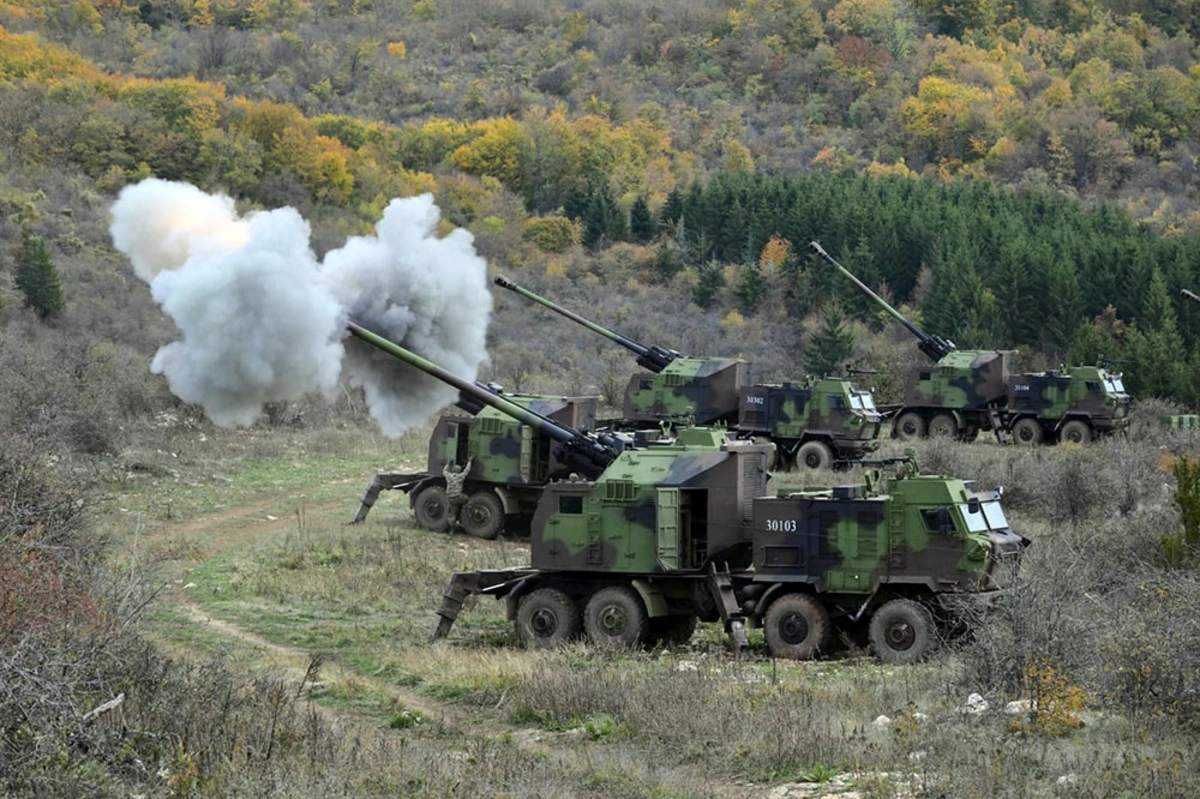
Serbian-made 155 mm NORA B-52 self-propelled artillery system
The DITA 155 mm self-propelled gun-howitzer artillery system, developed by the Czech defense company Excalibur Army, was also included among the weapons on display. In May 2024, Azerbaijani media reported that the Czech company planned to supply Azerbaijan with more than 70 wheeled 155 mm self-propelled howitzers. In September of the same year, according to reports on various websites, the first DITA howitzer was delivered to the Armed Forces of Azerbaijan.
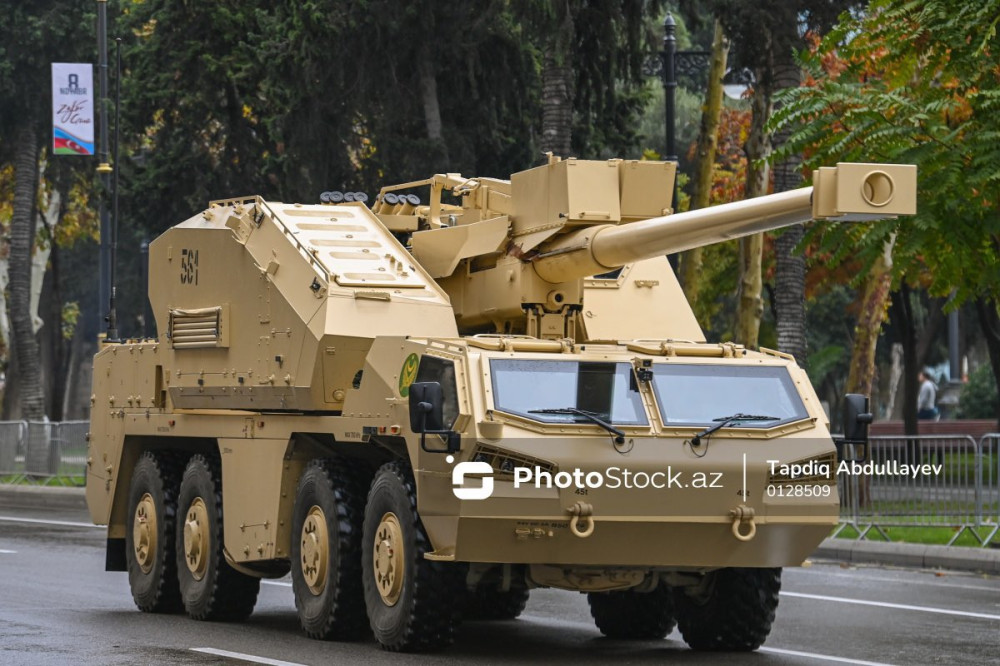
Czech-made DITA 155 mm self-propelled gun-howitzer artillery system
In June 2024, at Baku’s Heydar Aliyev International Airport, Azerbaijani President Ilham Aliyev was presented with the C-27J Spartan military transport aircraft, produced by the Italian company Leonardo. The C-27J military transport aircraft was also shown in the parade.
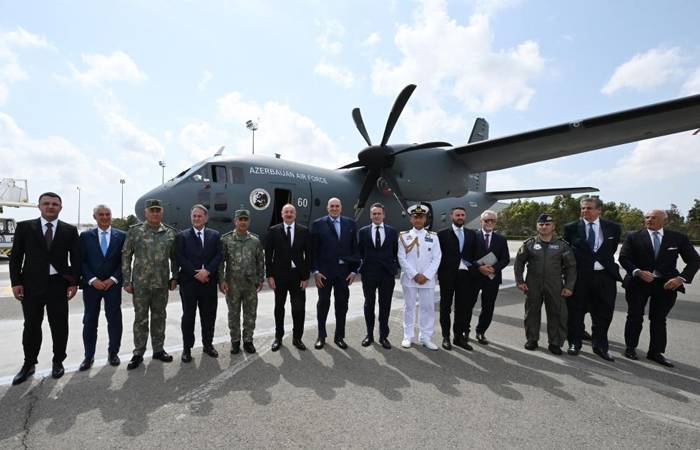
Italian-made C-27J Spartan military transport aircraft
The Azerbaijani armed forces also showed Israeli-made SandCat armored vehicles. These are light, highly mobile armored platforms designed for rapid reaction forces. During Azerbaijan’s 5th International Defense Exhibition (ADEX 2024), Baku presented its own upgraded version of the Israeli SandCat Stormer vehicle, which is reported to be equipped with the Spike NLOS missile system.
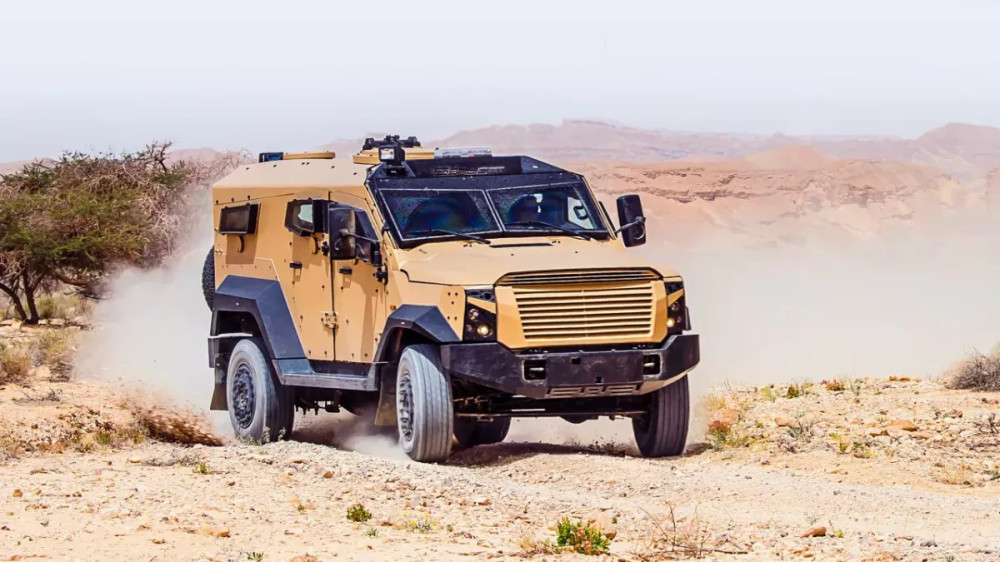
Israeli-made SandCat armored vehicle
The Cobra II (including the Cobra II ambulance variant) has also been incorporated into Azerbaijan’s arsenal. It is a multi-role armored platform with enhanced mine protection, used for reconnaissance, airborn forces, fire support, and personnel evacuation in combat zones. It is developed and manufactured by the Turkish company Otokar.
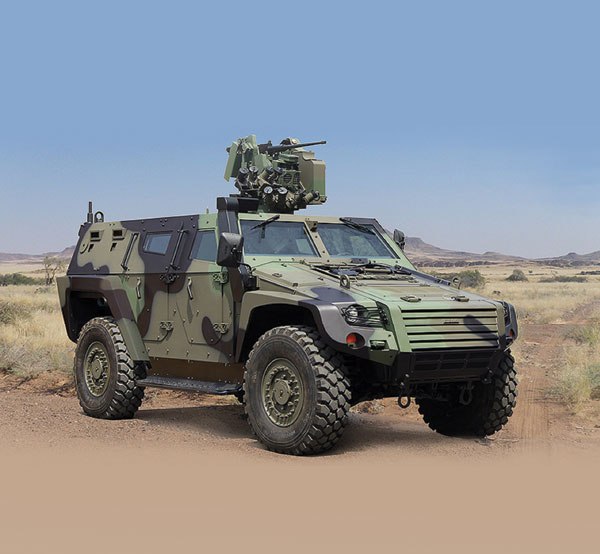
Turkish-made Cobra II armored platform
The Azerbaijani army also presented the KAYRA naval kamikaze unmanned system for the first time. It is a strike asset designed to destroy ships, port facilities, and coastal infrastructure. The system is produced by the Turkish company Dearsan.
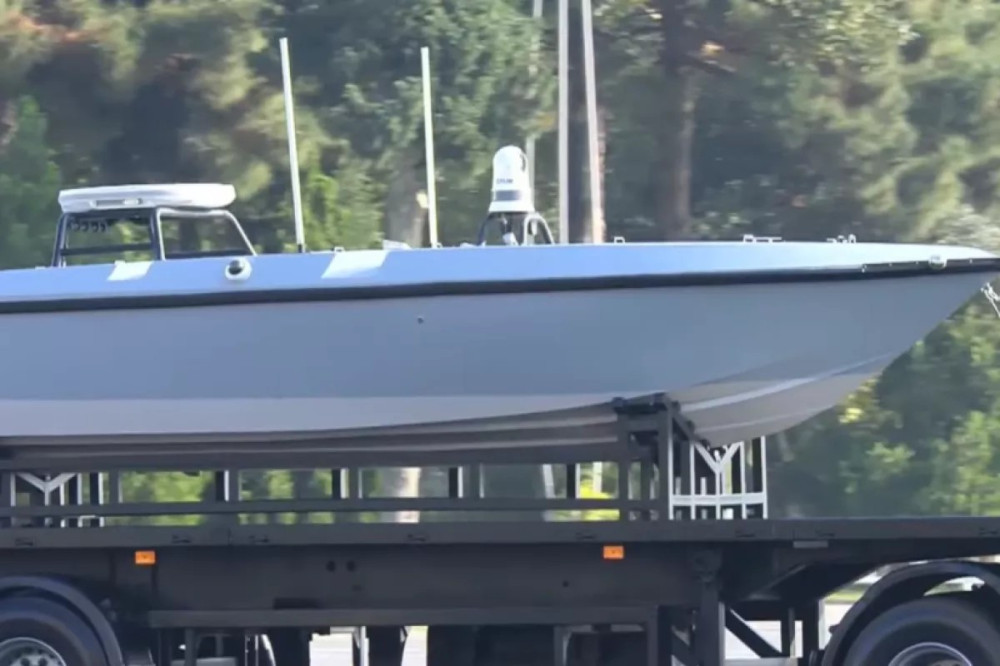
Turkish-made KAYRA naval kamikaze unmanned system
Among the weapons produced in Turkey is the Kasırga-TRLG 230A tactical missile system, manufactured by the Turkish company ROKETSAN.
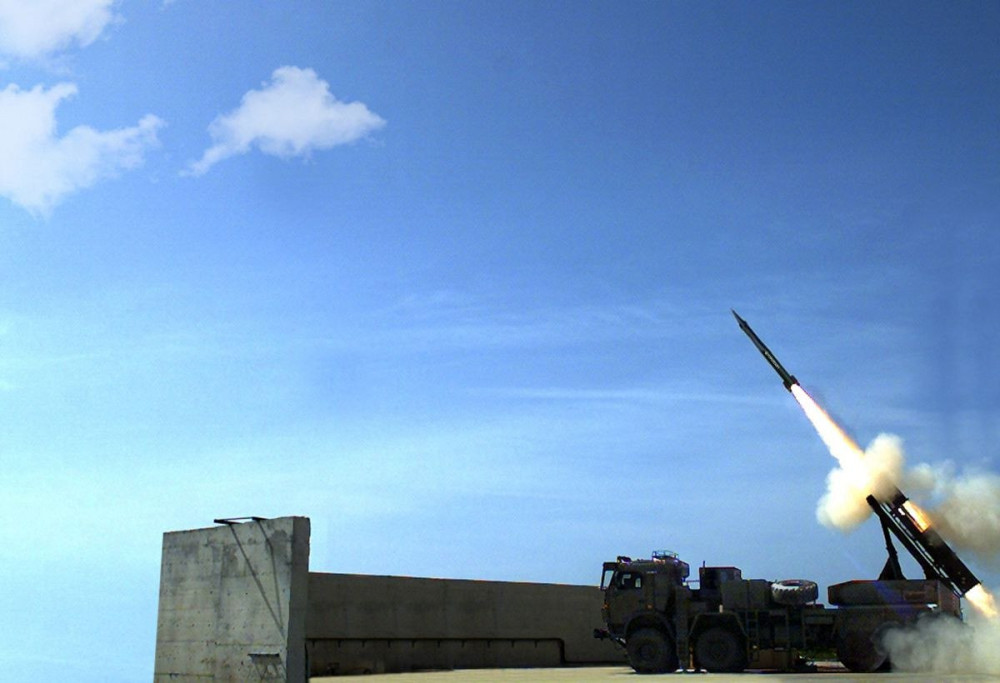
Turkish Kasırga-TRLG 230A tactical missile system
Azerbaijan’s military industry
In addition to weapons acquired from various countries, the military parade in Baku also showcased new weapons and equipment developed by Azerbaijan’s domestic defense industry and incorporated into the arsenal of the Azerbaijani armed forces. Among the systems displayed was the new Viking multi-purpose mobile combat system, designed to counter aerial targets.
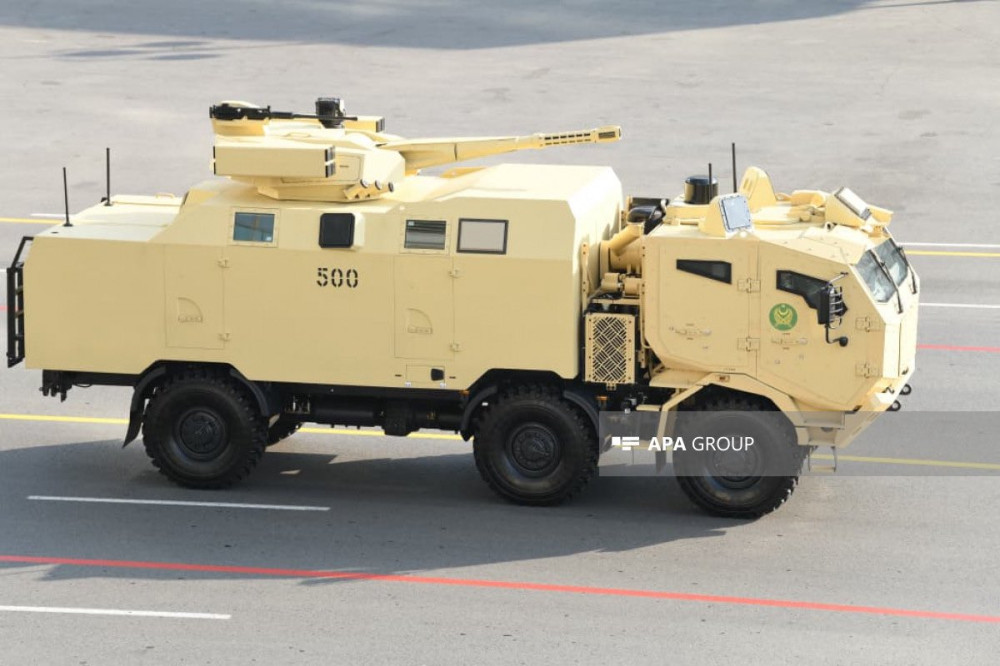
Viking multi-purpose mobile combat system
The Vaşaq special operations vehicles are also a new addition. They have been fully manufactured in Azerbaijan by ITX Motors. The Vaşaq (ITX-6L SOV) model was developed and produced with the direct support of Azerbaijan’s Ministry of Defense Industry, under a Ministry of Defense order. It is an armored vehicle designed for rapid reaction forces, used in urban environments and difficult terrain for assault and counterterrorism operations.
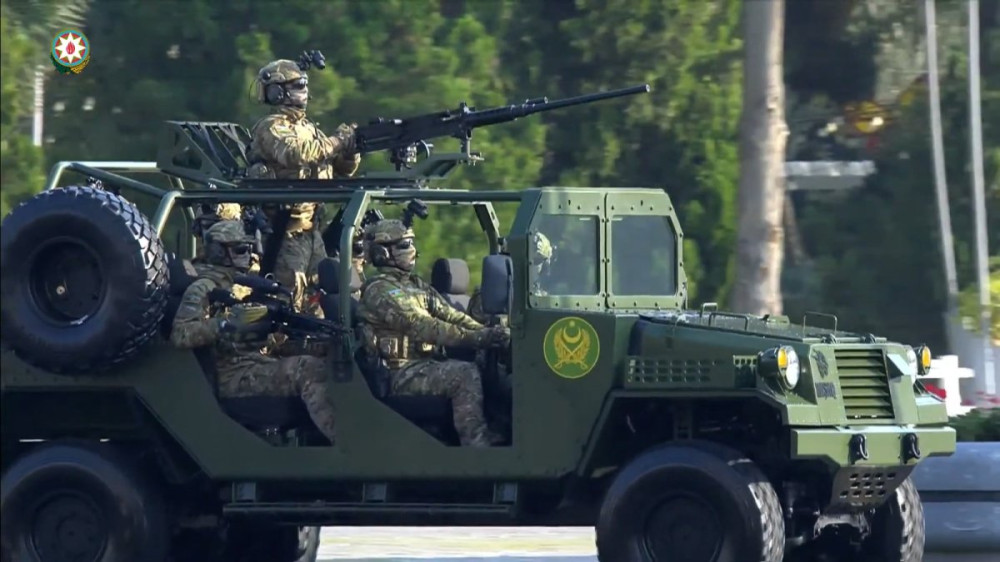
Vaşaq special operations vehicles
Aliyev also addressed the topic of military production on November 3. He stated that the defense industry “is developing rapidly; it is a very profitable sector.” Significant resources have been allocated to the sector because, according to Aliyev, the state’s goal is not only to meet domestic demand but also to export weapons to foreign countries.
In August 2024, Aliyev permitted private companies to work for Azerbaijan’s defense industry.
In an interview with local TV channels on January 5, 2026, he stated that licenses have been granted to 15 private companies, seven of which have already started military production. For the creation of new production facilities and the expansion of existing ones, one billion manats were invested in 2024–2025, half of which came from private sources. According to Aliyev, joint ventures have been established in Azerbaijan with leading global defense companies to produce unmanned aerial vehicles, artillery systems, and other equipment.
Azerbaijan’s State Statistical Committee does not publish separate data on the military industry or the foreign trade of domestically produced military equipment. However, the 2024 report on the activities of the Cabinet of Ministers indicates that the volume of state defense orders has more than doubled over the past two years, and that “a significant portion of the military products currently being manufactured is exported.” It is noted that during the year, enterprises under the authority of the Ministry of Defense Industry produced goods worth a total of 781.8 million manats, which is a 14.7% increase compared to the previous year. The total volume of exported products amounted to 565.8 million manats. In 2024, the ministry’s enterprises also overhauled 55 types of armored vehicles, small arms, and other equipment.
“Azerbaijan exports military products to nearly 20 countries around the world,” Aliyev said.
In an interview with the independent Azerbaijani outlet Toplum TV, Jasur Mammadov, head of the Caspian Institute of Military Studies, said that “if Azerbaijan wants to reduce its military dependence, it needs to have a strategy and ensure transparency.”
“Such a strategy is not known to either the public or the parliament. There should be a ‘white paper’ specifying which types of weapons Azerbaijan intends to produce over the next 5–10 years. We do not know what process is underway or what its goals are. The objective could be a complete transformation of the army, but there may also be certain business interests involved. This process must be transparent and under public oversight. We are talking about billions,” the expert emphasized.
According to Jasur Mammadov, “there is no information about which private companies have won the tenders for weapons production. This indicates that arms production is a business for the authorities, and it cannot be ruled out that it may be used for ‘money laundering.’” The expert also expresses doubts about the quality of weapons produced in Azerbaijan.
Although weapons purchased from abroad—China, Pakistan, Israel, Turkey, and Serbia—were displayed at the November 8 parade, the cost of the procured arms is undisclosed. Baku typically does not disclose either the price or the quantity of weapons it acquires. Over the past two years, Azerbaijan has increased its military and security expenditures, which now account for more than 20 percent of the state budget.
In 2024, according to the draft state budget of Azerbaijan, expenditures for defense and national security were planned at 6.421 billion manats (approximately $3.777 billion), representing 17.4% of the total state budget. Of this, spending for the Armed Forces was set at up to 2.465 billion manats ($1.45 billion), for national security at 413.4 million manats ($243.2 million), and for the Border Service at 487.7 million manats ($268.9 million). Special defense projects and measures were allocated 3 billion manats ($1.76 billion), with the remaining funds earmarked for other purposes. It was later reported that the defense and national security expenditures for 2024 would be increased from 6.421 billion manats to 7.126 billion manats.
The draft 2025 state budget allocates 8.396 billion manats to the defense and security sector. In December, during parliamentary discussions of the draft law “On the 2025 State Budget,” Finance Minister Samir Sharifov announced that the government had decided to increase budgetary expenditures for defense and national security in 2025 to up to 8.5 billion manats.
According to the 2026 state budget, 8.7 billion manats ($5.1 billion) has been allocated for Azerbaijan's defense and security sectors, which accounts for 20.9% of total expenditures. From this amount, slightly over 3 billion manats is allocated to the armed forces, while 480,623,148 manats is for national security and 541,633,496 manats is for border services. Additionally, just over 5 million manats is allocated to applied research in the field of defense and national security, and 4,656,698,016 manats is designated for other activities related to defense and national security.
Pro-government Azerbaijani sources claim that the weaponry presented at the parade does not represent the country’s full arsenal, and that “there are more powerful systems whose display is not expedient at this stage.” However, the equipment already showed is sufficient to demonstrate that Baku continues its aggressive policy of militarization and armament, with direct support from Turkey, Israel, and Pakistan, while also seeking to access new arms markets in European countries.