
“GEGHARD”
SCIENTIFIC ANALYTICAL
FOUNDATION


2026
2026
2026-02-02
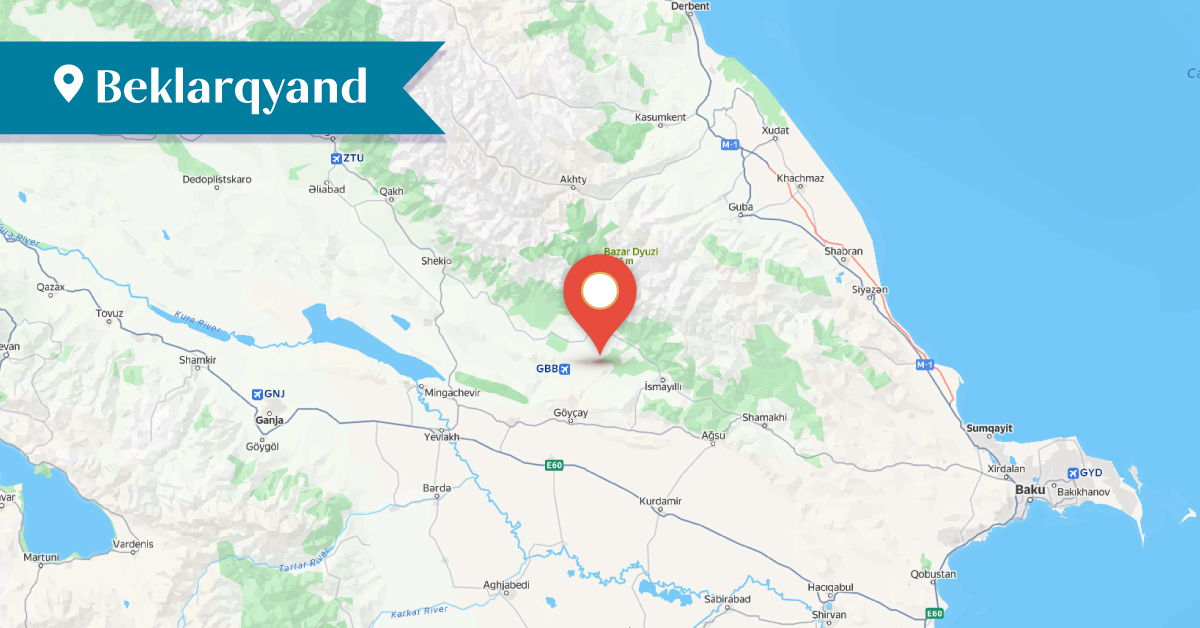
The settlement of Beklarqyand (or Beglarqend) is located 13.8 km south of Kutkashen (now Gabala). The population of the Armenian village moved here in the late 18th century from the Khachen, Varanda, and Jraberd regions of Artsakh. However, Armenian tombstones preserved in the village cemeteries indicate that Armenians had lived in Beklarqyand even before the 18th century, after which, for unknown reasons, the village was abandoned.
According to data from 1841, the village had 617 Armenian inhabitants; in 1889, the population was 841. The Armenian population of the village was 528 in 1901, 590 in 1905, and 526 inhabitants in 1914.
According to a record from 1875, there was a private school in the village where the Armenian language was taught by Aghasi Petrosyan Movsesyants. Grigoris Ter-Hakobyants, the head of the Armenian diocese of Nukhi had a significant contribution to the establishment of the school, which bore the name Surb Mesropyan. In the 1878–1879 academic year, the school had 42 pupils; in 1880–1881, 40 pupils; and in the 1889–1890 academic year, 28 pupils. There is no information about the school after 1895.
Beklarքyand had a church named Surb Stepanos with the first mention of it dating to 1821. The last recorded mention of the church dates to 1893. The priests of the Church of Surb Stepanos were Petros Hakhverdyan Khachatryants (served in 1821–1851), Hovhannes Harutyunyants (1836–1845), Sargis Ter-Stepanyants (1843–1845), Harutyun Ter-Hovhannisyan–Ter-Avagyants (1856–1861), Mkrtich Ter-Petrosyan Beklarbekyants (1861–1868), Hovhannes Aghbalyants (mentioned in 1888), and Yeghishe Ter-Hovsepyan (1908–1912).
Three cemeteries have been preserved in the territory of Beklarqyand. In the cemetery located on the outskirts of the village were buried the Artsakh Armenian settlers who had established themselves in the village in the 18th century. Burials in this cemetery continued until 1918. The other two cemeteries date back to the medieval period.
After 1918, there are no further references to the Armenian village of Beklarqyand. In that year, the Armenians of Beklarqyand also fell victim to the mass killings of Armenians organized throughout Eastern Transcaucasia by local Turkic forces and Ottoman troops that had invaded the region.
Bibliography
Barkhutaryants, M. The Land of Aghvank and Its Neighbors. Artsakh. Yerevan, 1999, p․ 113.
Khoi-Zadeh, Nor-Dar, 1895, no. 223, 19 December, p. 2.
Karapetyan, S. Aghvank Proper, Research on Armenian Architecture Foundation, 2024, Book II, Part 1, pp. 247–250.
General Assembly of the Philanthropic Society, Mshak, 1888, no. 17, 11 February, p. 1.
Syunetsi. Correspondence, Nor-Dar, 1887, no. 86, 3 June, p. 2.