
“GEGHARD”
SCIENTIFIC ANALYTICAL
FOUNDATION


2026
2026
2024-10-22
Despite the influx of nomadic, primarily Turkic-speaking tribes into Iran and Atrpatakan in the 11th-13th centuries, Persian remained the dominant language in the region. However, alongside the flourishing of Iranian culture, the Persian language, and local dialects, the Turkic language used for internal communication among the nomadic Turkic tribes living in Atrpatakan continued to expand its boundaries. It is known that Ismail I, the first Safavid Shah of Iran, wrote poetry in Turkic.
Starting with the establishment of the Safavid dynasty in Iran in the early 16th century, Turkic speech began to spread widely in Atrpatakan. This was partly due to the spread of Shiism, as many Shia Turkic Qizilbash tribes migrated from Asia Minor to Iran and supported the rise of Safavid rule. Despite the collective name 'Qizilbash,' meaning 'Red Heads,' these Turkic groups did not share a common origin. They included tribes such as the Shamlu, Ustadjlu, Tekellu, Rumlu, Bayat, and others, who joined the Safavids in their struggle for power in Iran and became their allies. The Qizilbash formed the military aristocracy of the newly established state and served as the Shah’s personal bodyguard. The Safavid period was a turning point for Iran, reshaping its religious landscape, leading to the settlement of Turkic tribes in Atrpatakan, and promoting the spread of the Turkic language.
The spread and transformation of a language is a gradual process, especially when the demographic makeup of an area remains largely unchanged. The local Iranian-speaking population, through interaction with the incoming Turkic-speaking people, gradually learned their language. Part of the Turkic-speaking population became the local ruling class, while the other part consisted of nomadic herders with low literacy rates, making it difficult for them to learn the local Iranian languages.
As a result of all this, Turkic languages became widespread in Atrpatakan. However, it should be noted that the Atrpatakanis are Iranians who have their own local culture, speaking Atrpatakan Turkic, which is not in opposition to Persian. In other words, the Atrpatakanis or Azaris are Turkic-speaking people with an Iranian cultural identity, similar to other peoples living in Iran with their own local cultures, such as the Talysh, Mazandarani, Balochi, and others. Meanwhile, this phenomenon does not extend to the Republic of Azerbaijan north of the Arax River. The appropriation of the place name Azarbaijan and the ethnic and linguistic terms Azari has been aimed at artificially creating a national and cultural identity, a civilized past, and history.
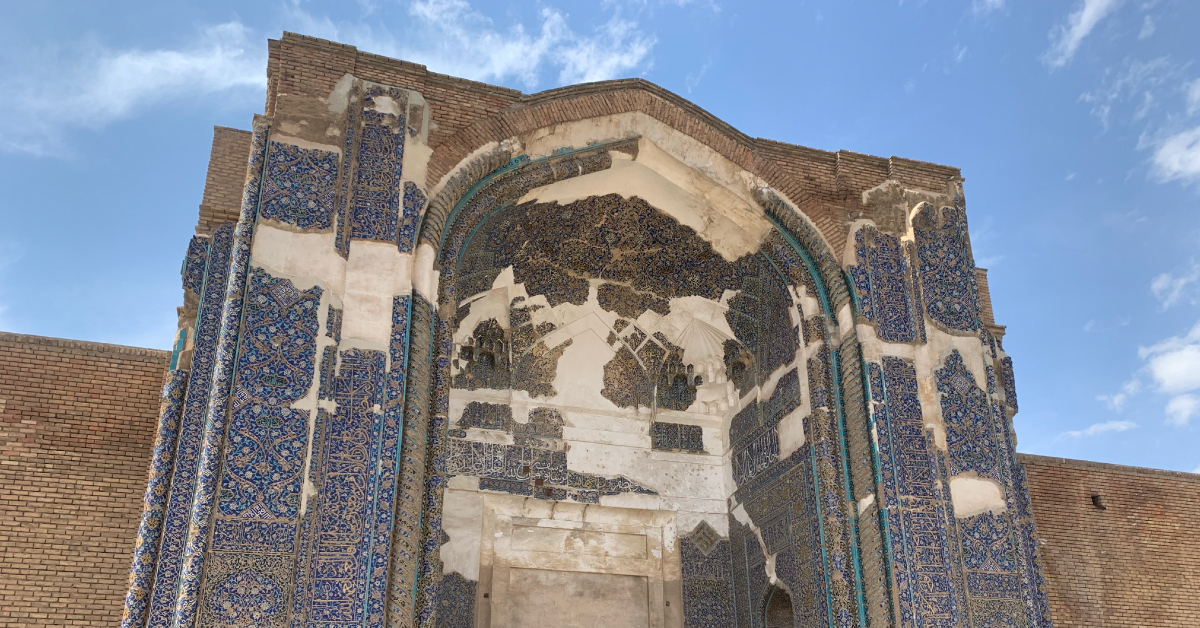
Photo: The Blue Mosque of Tabriz, Masjed-e Kabud, 15th century