
“GEGHARD”
SCIENTIFIC ANALYTICAL
FOUNDATION


2026
2026
2024-08-26
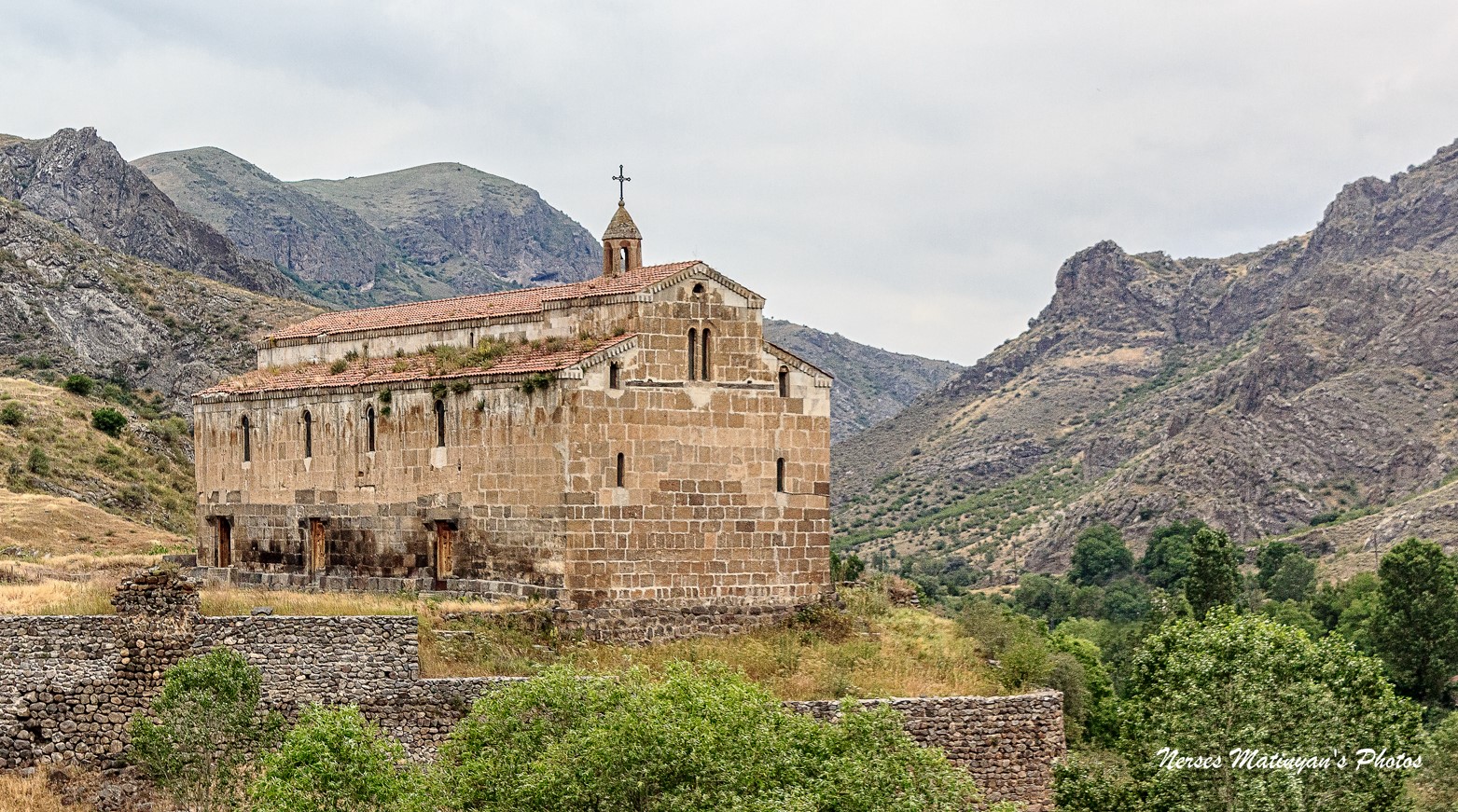
The appropriation of Armenian culture by Azerbaijanis began in the Soviet era. Azerbaijani "scholars" proclaimed medieval Armenian monasteries, churches, khachkars (cross-stones), tombstones, and other monuments as the cultural values of Albanian or Turkic tribes. Ignoring even the Armenian inscriptions found on historical monuments, Azerbaijan is trying to appropriate and present Armenian material culture as Azerbaijani. Such a fate has also befallen one of the masterpieces of Armenian church architecture, the Tsitservanavank Monastery, in the territory of Kashatagh.
In late 2020, the Aliyev regime organized a "theatrical performance" at Tsitservanavank Monastery and uploaded a video of it to the internet. Several representatives of the Udi people, who actually are captives in Azerbaijan, under the control of Azerbaijani soldiers, imitated a religious ritual in the monastery. The goal was to use this propaganda event to declare the monastery Albanian, with the long-term plan of claiming it as part of Azerbaijan's historical and cultural heritage.
However, the reality is as follows: Tsitsernavank is located in the Aghahechk district of the historical Syunik province of Greater Armenia (approximately 30 km northwest of the regional center of Berdzor, on the right bank of the Aghavno-Arkunaget River, a western upper tributary of the Hakari River, in the village of Tsitsernavank). Since the Middle Ages, the monastery has been a renowned holy site, famous for its St. Gevorg basilica (built in the 4th century on the foundation of a pagan temple), whose walls and surrounding area contained Armenian inscriptions[1].
Tsitsernavank is also known in history and folk memory by other names such as "Crow’s grave," "Crow’s ark," "Tsitsarnavank," etc. The 13th-century Armenian historian Stepanos Orbelian mentions Tsitsernavank among ten Armenian monasteries and hermitages in his work "History of Syunik"[2]. It was a major pilgrimage site, especially during the feasts of Ascension and the Holy Cross, visited by thousands of Armenian pilgrims from the provinces of Syunik and Artsakh.
In 1993, the territory of Tsitsernavank Monastery was liberated. Between 1998 and 2000, excavations were carried out in the courtyard of the monastic complex, the area was cleared, and the church was renovated. The refectory was reconstructed and turned into a museum, where the artifacts discovered during the archaeological excavations were stored.
Photo by Nerses Matinyan
[1] Sedrak Barkhudaryan, Corpus of Armenian Epigraphy, vol. 5, Yerevan, 1982, pp. 192-193.
[2] Stepanos Orbelyan, History of Syunik, Yerevan, 1986 p. 197.