
“GEGHARD”
SCIENTIFIC ANALYTICAL
FOUNDATION


2026
2026
2024-05-20
Caucasian Knot published an article entitled “Analysts in Baku rejected accusations of the destruction of historical monuments in Karabakh.”
All historical monuments in Karabakh have been taken under state control; none of them have been destroyed or damaged, but those built in the last 30 years, are not historical monuments, said historian Faiq Ismayilov.
He refers to the church of the Holy Ascension of Berdzor, built in the 1990s. None of the many existing theses and theories about cultural heritage can justify such an anti-scientific thesis. Heritage cannot be defined by the year of its creation and/or the territory of its creation. The principles defining cultural heritage, which are also the basis of a number of UNESCO conventions and declarations (which Azerbaijan has also signed), do not in any way emphasize the 'time' of the creation of cultural heritage. Among these important conventions are, for example, the Hague Convention for the Protection of Cultural Property in the Event Armed Conflict of 1954. The article 4 of the convention and the article 15(a) of the Second Protocol adopted in 1999 state that cultural heritage shall be preserved and respected.
Another anti-scientific falsehood found in the article is the claim that Artsakh's Christian heritage has nothing to do with Armenians but is Albanian. “Christian monuments in Karabakh and Eastern Zangezur are not related to Armenians. The origins of Christianity in Azerbaijan trace back to the early Middle Ages, to the state of Caucasian Albania. After the Arab caliphate seized the territory of modern Azerbaijan, Christianity began to be gradually supplanted. However, until the 13th century, the Khachen principality, located in the modern Lachin and Kelbajar regions, persisted. Even after this state's existence ended, Christian culture was preserved in remote mountainous areas. During the years of occupation, a policy of Armenianization was carried out in Karabakh. The Albanian monuments were remade in the Armenian style, and Armenian churches were built even in areas where Armenians had never lived," Ismailov said.
The theses on the Albanization of Armenian heritage, which circulated in the 1930s, became one of the mechanisms for the expropriation of Armenian cultural heritage.
According to international legal norms, it is prohibited and considered a crime to erase the identity of Armenian heritage and to declare it as Albanian.
Thus, Azerbaijan not only does not respect the obligations assumed by the international documents it signed, but also tries to spread false information at the state academic level. In the same article, it is mentioned: 'All the historical monuments of Karabakh were taken under state control; none of them were destroyed or damaged,' says Faiq, an employee of the Bakikhanov Institute of History of the National Academy of Sciences of Azerbaijan.
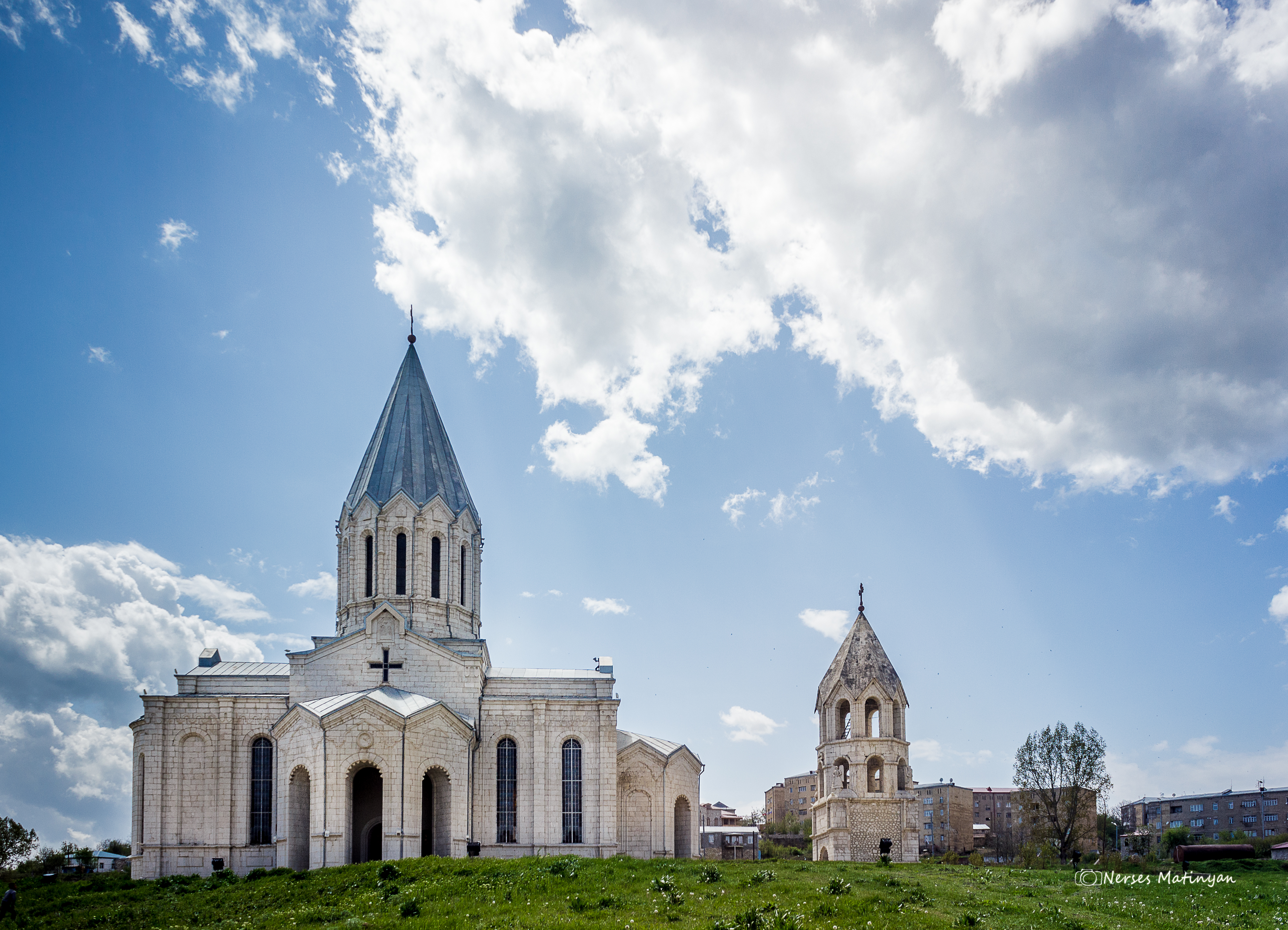
This is not the only lie spread at the state level. From the very first days of the 44-day war in Artsakh in 2020, Azerbaijan targeted and deliberately destroyed Armenian heritage, and this policy continues to this day. Shushi's Ghazanchetsots Church, Kanach Zham Church fall victim to Azerbaijani cultural vandalizm, Karintak village was completely destroyed, historical cemeteries were razed to the ground.
The preservation of the cultural values of Artsakh should be at the forefront of the international scientific community's attention, serving as a restraining factor to Azerbaijan's anti-Armenian policy.
Photo by Nerses Matinyan