“GEGHARD”
SCIENTIFIC ANALYTICAL
FOUNDATION


2026
2026
2026-10-20
Against the backdrop of events unfolding in the Middle East in recent years, developments concerning the Kurds have often been pushed out of the spotlight.
On August 25, 2026, Mazloum Abdi, commander of the Syrian Democratic Forces (SDF), announced in Damascus the dissolution of the SDF and the Autonomous Administration, as well as the full integration of their structures into the Syrian state system and army. The SDF, mainly consisting of Kurdish forces, was one of the United States’ main allies in the fight against the terrorist organization Islamic State (IS). The organization controlled significant parts of Syrian territory, primarily in the country’s northern regions and east of the Euphrates River.
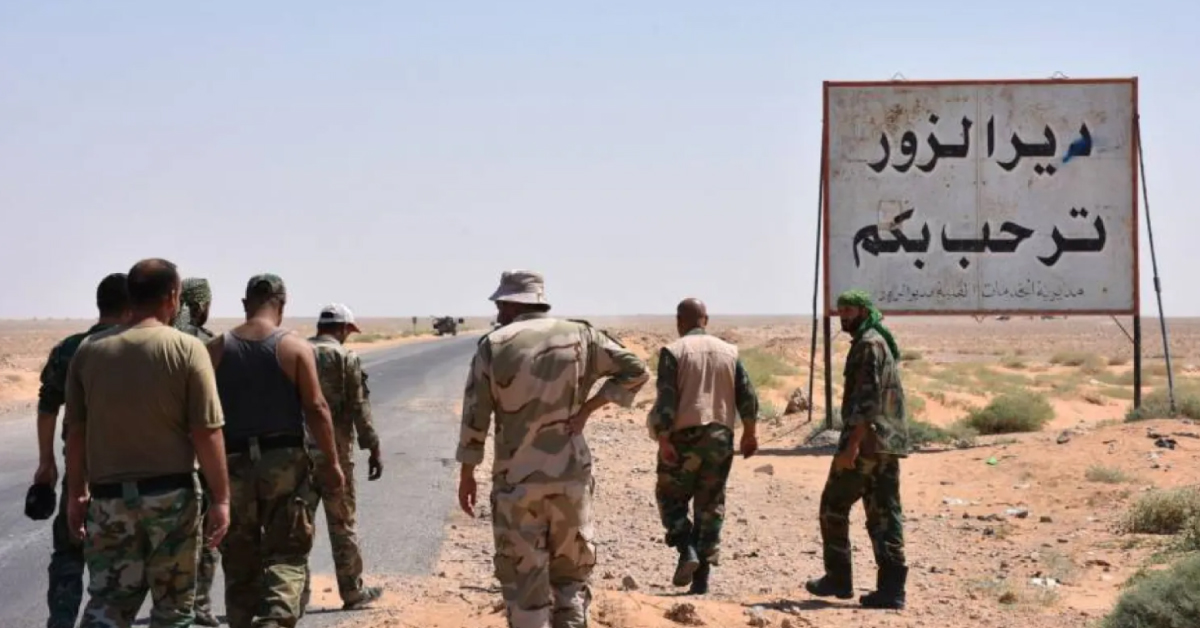
Following the overthrow of Bashar al-Assad in Syria in December 2024, the new authorities under Ahmed al-Sharaa demanded that the Kurds lay down their arms and rejected any option for granting them autonomy. The deadline for implementing the agreement reached between the SDF and Syria’s new authorities in March 2025 was set for the end of 2025. In January 2026, Syrian government forces launched a large-scale offensive, taking control of major cities east of the Euphrates, including Raqqa and Deir ez-Zor. As a result, the de facto autonomy established by the Kurds came to an end.
The United States did not intervene in these developments, thereby underscoring its support for the transitional government led by Ahmed al-Sharaa. Earlier, between January 6 and 10, Syrian government forces, with Turkish support, had taken control of the Sheikh Maqsoud and Ashrafieh neighborhoods of Aleppo. During the offensive, a significant number of Arab tribal formations operating within the Syrian Democratic Forces also defected to the government side.
The agreement reached on January 29, 2026, provides for a ceasefire and the gradual transfer of the Syrian Democratic Forces’ military and civilian structures to the Syrian state. The facilities and assets to be transferred include border crossings, oil fields, and prisons.
Earlier, on January 16, under Decree No. 13, the Syrian president had recognized several rights of the Kurds. In particular, Kurdish was recognized as a national language, Nowruz was declared a national holiday, and provisions were made to enable residents of Kurdish origin to obtain Syrian citizenship.
The developments unfolding in Syria are interconnected with the process of dissolving the PKK (Kurdistan Workers’ Party) in Turkey. In February 2025, the organization’s imprisoned leader, Abdullah Öcalan, called for an end to the armed struggle, the laying down of arms, and the dissolution of the party. In May, the PKK announced its dissolution, and in the summer, its fighters symbolically burned their weapons. As part of Turkey’s “Terror-Free Turkey” initiative, on August 10, 2026, the Turkish parliament passed the Law on Strengthening National Solidarity and Social Integration. A total of 468 lawmakers voted in favor of the legislation, while 88 voted against it. The law established a mechanism for verifying the PKK’s disarmament and dissolution and provided for the possibility of temporarily suspending criminal proceedings against certain members. However, it does not provide for an amnesty.
These two developments represent significant gains for the Turkish and Syrian authorities. In Turkey, the more than four-decade-long Kurdish armed struggle is nearing its end, while in Syria, the ability of Kurdish forces to operate independently and exercise self-government in border areas is being curtailed. Meanwhile, the Syrian government is consolidating its position by establishing control over almost the entire country. Given Ankara’s considerable influence over the authorities in Damascus, these developments also contribute to Turkey’s growing regional weight. Such a situation could run counter to Israel’s interests. Israel regularly carries out strikes against military infrastructure in Syria in an effort to neutralize these assets. The targets have also included facilities where Turkey had planned to deploy its forces.
Amid the deepening tensions between Turkey and Israel in recent years, Ankara’s expanding influence in Syria and the potential consolidation of its military presence there could pose additional challenges for Israel. Another possible consequence of these developments could be an increase in Turkey’s influence in Lebanon. In recent years, Ankara has sought to expand its influence in Lebanon, where Iran and Saudi Arabia have traditionally played significant roles. However, military strikes against Iran and its ally Hezbollah have altered the regional balance of power, potentially creating opportunities for Turkey to expand its political influence.