
“GEGHARD”
SCIENTIFIC ANALYTICAL
FOUNDATION


2026
2026
2026-10-19
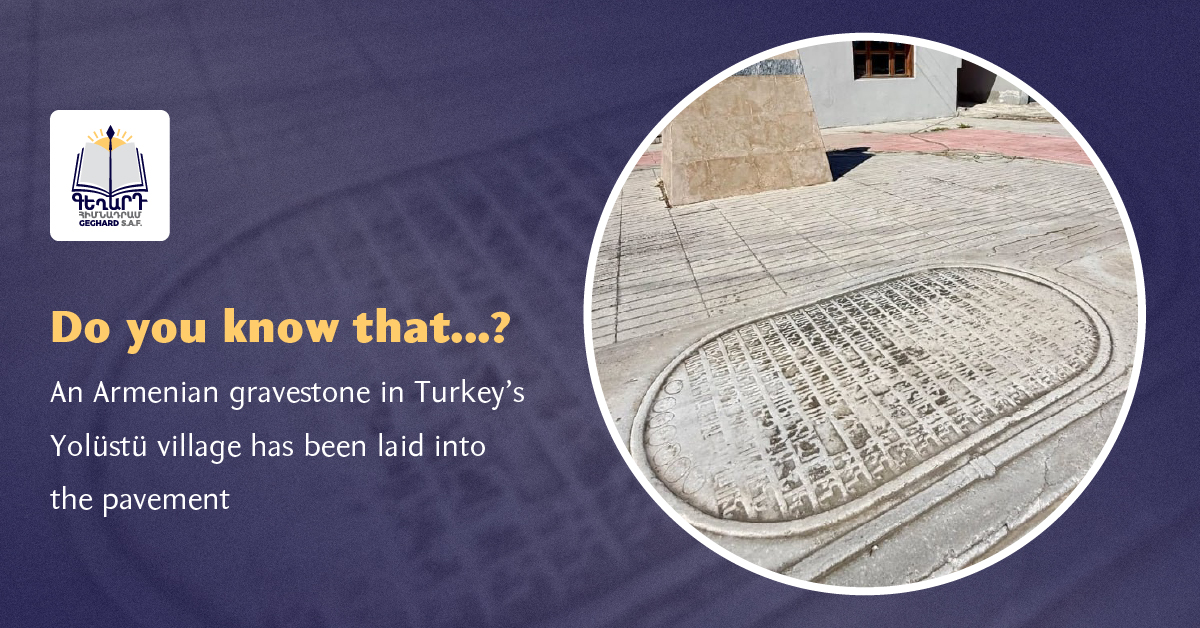
Above, a gilded bust of Atatürk; opposite, the village administration building. Sometimes a single photograph is enough to tell a whole story. This is the village of Yolüstü in the Ardvin region. Directly in front of the village administration building, in the kerb section of the pavement, an Armenian tombstone can be seen today. It has simply become part of the pavement — a stone that people walk over, often without even noticing that it was once someone’s gravestone. Below, the Armenian tombstone; above, the gilded bust of Atatürk; opposite, the building of the present-day local administration.
The past, the official symbol of the state and the present are literally within a few metres of one another.
Today, one of these stories stands on a pedestal, while the other lies beneath people’s feet. A single photograph reveals both the past and the present of the village. But one important question remains: how does a country treat the traces of its past that have survived within its territory? When this tombstone was incorporated into the pavement, did those who laid it really not understand what kind of stone it was? Or was it the opposite—they knew exactly what it was… We do not have the answers to these questions. But where history occasionally resurfaces, it speaks far more eloquently than any answer ever could.
Armenians lived in Ardvin and the surrounding regions for centuries. They had villages, churches, and cemeteries here…