
“GEGHARD”
SCIENTIFIC ANALYTICAL
FOUNDATION


2026
2026
2026-04-20
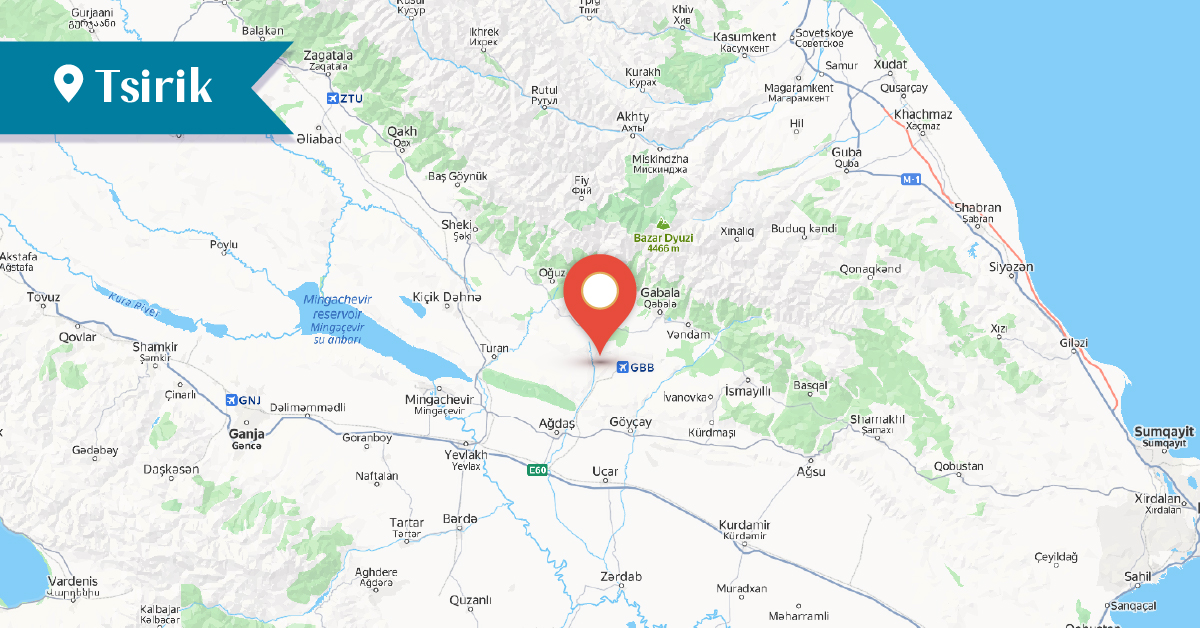
Tsirik was one of the Armenian villages of the historical Caucasian Albania. It was situated 21 km southwest of the present-day administrative center of Gabala (Kutkashen).
To the north of the village, on the hills, lies a sacred site known as Geom Murat. According to tradition, one of the disciples of Saint Yeghishe the Apostle was martyred there.
Armenians settled in Tsirik in the 18th century, having migrated from the Dizak and Varanda districts of Artsakh.
In 1841, the village had 132 Armenian inhabitants; in 1889, 144 Armenians lived there. According to data from 1901, the Armenian population of Tsirik was 158, and in 1914 it reached 166.
In the 19th century, the village was home to the Surb Astvatsatsin (Holy Mother of God) Church. Religious services were conducted by priests from neighboring Armenian villages. In 1912, a priest named Sahak Shirvanyants served in Tsirik.
The village was destroyed during the events of 1918, when Turkish-Tatar forces destroyed numerous Armenian villages in Eastern Transcaucasia. After these events, Armenians no longer lived in the village. Today, Tsirik remains an abandoned settlement site.
Bibliography
Barkhutaryants, M. The Land of Aghvank and Its Neighbors. Artsakh. Yerevan, 1999, p 114.
Karapetyan, S. Aghvank Proper, Research on Armenian Architecture Foundation, 2024, Book 22, Part 1, pp. 258-259.