
“GEGHARD”
SCIENTIFIC ANALYTICAL
FOUNDATION


2026
2026
2025-12-15
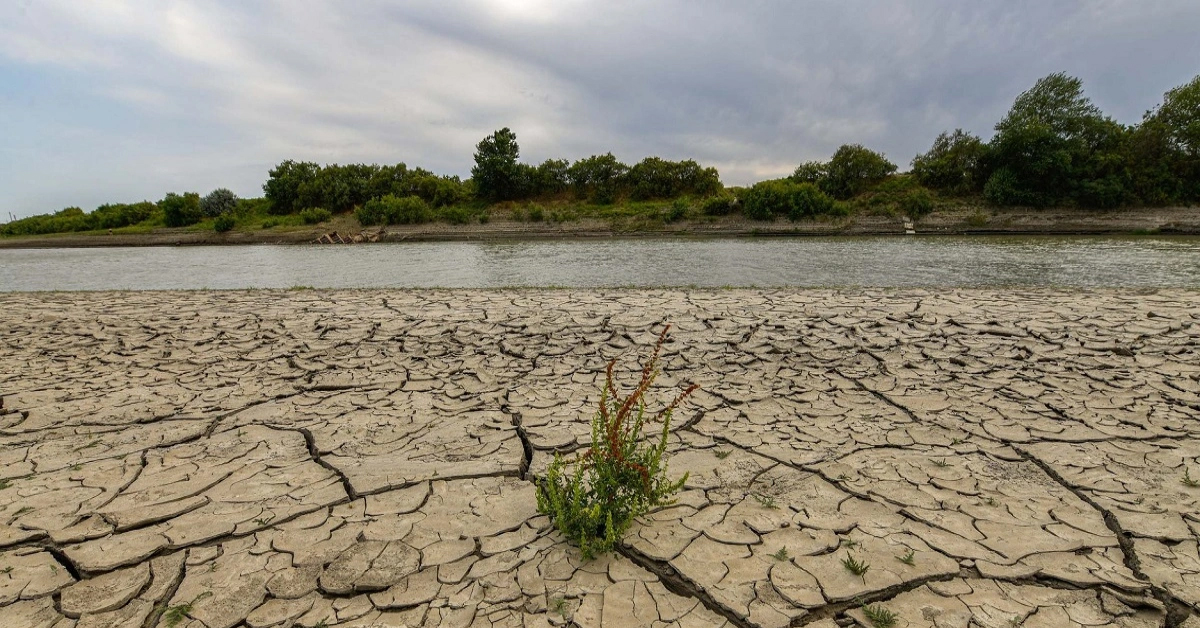
The issue of water scarcity and the deterioration of the situation caused by it has been discussed in Azerbaijan since the 1990s. As consequences of the existing situation, the collapse of the Soviet system and, in particular, the outcomes of the first Nagorno-Karabakh War have been emphasized. Probably taking into account various forecasts by foreign experts, in 2013 the president of Azerbaijan stated that the Araks, Kura, and Samur rivers do not originate in the territory of Azerbaijan, which constitutes a “strategic problem and a threat to water security.”
The Samur is a border river between Russia and Azerbaijan. Azerbaijan has periodically raised with the Russian Federation numerous border-related issues concerning the river’s mouth. In 2013, Russia and Azerbaijan signed an agreement, after which Azerbaijan temporarily refrained from making claims over border and riverside villages, while the Russian side did not object to the operation of the Takhtakorpu canal intended to transfer drinking and irrigation water from the river to Baku.
Azerbaijan also has undeclared water-related problems with Turkey. Turkey’s water policy involves reducing the flow of water resources originating in Turkey and flowing to neighboring countries by storing large volumes of water. Turkish plans to construct major reservoirs on the Kura and Araks rivers have been known since as early as 2010. Turkey even intended to alter the course of the Kura River, diverting its waters via the Chorokh River toward the Black Sea. However, Turkish plans that would further reduce the flow of the Kura River—the main source of drinking and irrigation water for Azerbaijan—have not been criticized in Azerbaijan.
Some pro-government Azerbaijani environmentalists, especially after 2020, have continued to justify Turkey even against the backdrop of an unprecedented decline in the water level of the Kura River. Although the river’s course has not been altered, the Turkey has constructed a number of reservoirs on the Kura for irrigation and energy purposes, thereby reducing the river’s flow. In addition, two large reservoirs built on the Araks River in the Sarikamish and Karakurt districts of Kars province and in the Tuzluca (Koghb) district of Igdir province have significantly reduced the flow of the Araks.
Azerbaijan has usually blamed Armenia and Georgia for polluting the Kura River, which is the main source of drinking and irrigation water. According to Sadiq Gurbanov, chairman of the Azerbaijani Parliament’s Committee on Natural Resources, Energy, and Ecology, the Kura river enters Azerbaijan already in a polluted state. Azerbaijan has also complained about Georgia for extracting excessive amounts of water from the Alazani (Ganikh) River.
Baku has groundlessly accused Armenia of polluting the Debed River, a tributary of the Kura, through the Alaverdi Copper-Molybdenum Combine, as well as of contaminating the Araks River and its tributaries through the Metsamor Nuclear Power Plant, industrial facilities in Ararat Province, and the Kajaran Copper-Molybdenum Combine, and of extracting water in excess of established limits. According to Azerbaijani reports, as a result of this pollution the concentration of copper, molybdenum, and other heavy metals in the Araks exceeds permissible norms by up to 100 times, leading to the destruction of the river’s microflora and fauna, with negative consequences for public health.
The launch of Azerbaijan’s policy of “resolving” the Karabakh issue through the exploitation of water resources can be traced to 2012, when Baku began actively advancing anti-Armenian “water” propaganda. Armenia was accused of “blocking” water resources flowing toward Azerbaijan in Artsakh, Tavush, and Syunik, of “depriving” Azerbaijani settlements of water, and—most strikingly—of “unilaterally exploiting” Lake Sevan.
Unfortunately, these false accusations presented by Baku in “attractively packaged” form have found a certain degree of understanding within the international community, which is concerned about the fate of the planet and supportive of initiatives aimed at mitigating the negative effects of climate change.
As a result, on January 26, 2016, on the eve of the April Four-Day War, the Parliamentary Assembly of the Council of Europe adopted resolution No. 2085, titled “Inhabitants of frontier regions of Azerbaijan are deliberately deprived of water.” Point 5 of the resolution referred to the statement issued on May 20, 2014, by the OSCE Minsk Group Co-Chairs, in which they expressed hope that “the parties would reach an agreement on the joint management of water resources for the benefit of the region.” It was also stated that the Sarsang reservoir was in an а critical condition and posed a threat to Azerbaijani settlements. The resolution urged Armenia to withdraw its armed forces from Azerbaijani territory and to allow independent engineers and hydrologists unhindered access to conduct assessments.
In essence, Baku used this document as a justification for the April aggression against Artsakh and successfully “introduced” it into the negotiation process. It gave new momentum to the Azerbaijani propaganda's manipulation of the issue of Sarsang, Mataghis, and other water resources of Artsakh. Publications appeared claiming that, as a result of the 1994 ceasefire, “Azerbaijan not only lost territories but also water resources, including a reservoir built in 1976 with a capacity of 560 million cubic meters, controlled by Armenian separatists, thereby depriving Azerbaijan’s Tartar district and adjacent areas (with a population of about 480,000) of water.”
In effect, the 2016 resolution allowed Azerbaijan to portray Armenia as an aggressorboth (militarily and “ecologically”) thereby “justifying” its subsequent attacks. At the same time, the Azerbaijani authorities fed their own public with the false narrative that “Azerbaijanis have no water because Armenians have blocked its flow.”
Azerbaijan’s water relations with Iran have also been politicized. As early as February 2016, an agreement was signed between Azerbaijan and Iran on the joint operation of the Khudafarin Reservoir (which came under Azerbaijani control only during the 2020 war against Artsakh). According to the agreement, Iran was responsible for completing the construction of hydroelectric plants, as well as for the preservation and management of water and energy resources, until Azerbaijan’s territorial integrity was restored.
Since 2020, the water issue has become one of the main topics on the agenda of the Azerbaijani authorities. During the summer months of 2020, the Azerbaijani media was flooded with reports about water shortages. There were grievances not only in agricultural regions but also in Absheron. In order to ease the tension, hearings were initiated in the parliament. Participants emphasized that Azerbaijan is in the worst situation in the Caucasus in terms of water resources, due to the geographical location of water sources, their uneven distribution, and the pollution of the rivers that constitute the main water reserves. In this context, Baku asked Iran w to reduce water extraction in its territory and increase the discharge from the Araks reservoir. Tehran responded positively, partially alleviating Azerbaijan’s grievances.
At the government meeting of July 23, 2020, the president of Azerbaijan acknowledged that water scarcity had created problems in the agricultural sector. The 2017–2022 state program for the development of cotton growing (“white gold”) proved to be ineffective.
According to Aliyev, the country is undergoing desertification, a process that could intensify as early as 2030. Issues related to drinking and irrigation water were declared among the government’s top priorities, and it was urged to take decisive steps in the coming years to meet growing needs. As a result, Action Plan for 2020-2022 on ensuring the efficient use of water resources was adopted, envisaging the construction of 10 new reservoirs, water pipelines and irrigation networks in cities lacking water supply, the drilling of wells, and other measures.
After the 44-day war of 2020, nine reservoirs and thirty hydroelectric power plants in Artsakh came under Azerbaijani control. In 2021, Aliyev stated that the Mataghis reservoir was of “strategic importance” for Azerbaijan and that it would “strengthen the water security of Azerbaijanis and resolve the water supply problems of many villages.” However, a year later, residents of the Tartar district had still “not seen any water,” and their expectations were not met. In June 2022, Artsakh government agreed to release part of the water from Sarsang toward Azerbaijan during the summer months. It became clear that only a negligible portion of the water reached the fields through earthen canals (a fact also acknowledged by Aliyev). Instead, officials responsible for the sector began to justify the situation by claiming that repair work could not be carried out in “mine-contaminated” areas.
In the case of Artsakh, this process culminated on December 12, 2022, with the closure of the Lachin Corridor by so called “eco-activists.” However, Azerbaijan’s actions were not limited to Artsakh. Between 2021 and 2023, Azerbaijani forces occupied the areas of Sev Lake, the Al Lakes, and the headwaters of springs that feed Lake Sevan.
In materials targeting an international audience, Azerbaijan has used the term “regional value,” claiming that Azerbaijan receives only a small share of the South Caucasus’s water resources. The chair of the Azerbaijani parliament’s Committee on Natural Resources, Energy, and Ecology stated that 62 percent of the region’s water resources are in Georgia, 28 percent in Armenia, and only 10 percent in Azerbaijan. Since Lake Sevan is the largest source of drinking water in the region, this narrative implicitly contains claims over Armenia’s sovereign territory.
According to 2022 data, water resources entering Azerbaijan from neighboring countries amount to 19–20.3 km³. The country’s average annual water volume is 36 billion m³, yet only about 12 billion m³ is actually used. According to forecasts by the World Resources Institute (WRI), climate change will lead to water-related challenges in one-fifth of the world’s countries by 2040, and Azerbaijan is also facing the risk of increasing aridification.
In 2021, the president of Azerbaijan spoke about the outdated and inefficient technologies in the water sector, acknowledging that one of the causes of water scarcity is the earthen canals, which account for 70% of the system. In recent years, other officials have also begun to speak about the sector’s inefficient management. As a proposed solution, an increase in water tariffs was suggested, emphasizing that drinking water is used in Baku’s green spaces, private gardens, and cleaning facilities, while access for citizens is limited to certain hours. Other factors contributing to water-sector problems include violations of construction standards, the building of low-quality pipelines, illegal construction, high water consumption, and population growth. Plans were also announced to build a desalination plant to make Caspian Sea water potable, but the project’s details remain confidential to this day.
Ahead of the COP29 climate summit in Baku in 2024, events focusing on water issues were given even greater prominence in Azerbaijan. In March, the city hosted the international “Water Week” conference. For the first time, the “Water Management” international exhibition was held. According to official statements, the events were dedicated to global water scarcity and climate change, the efficient and sustainable use of water resources in Azerbaijan and the Caspian region, innovations in ecology, and other related topics.
Throughout 2024, Azerbaijani media continued to raise alarms about water shortages in the capital and surrounding areas. In reality, the problem stems not only from “neighboring countries,” but also from outdated and worn-out infrastructure, poor management, and irresponsible water use. Moreover, there is evidence that several reservoirs and lakes in Azerbaijan have been controlled by oligarchic officials for private gain.
In fact, despite forecasts predicting a deterioration of the situation, Azerbaijan possesses sufficient water resources; however, these resources are not accessible to the country’s general population. The Azerbaijani authorities have effectively neglected existing environmental problems and the needs of the population to such an extent that not only remote villages and towns lack adequate drinking and irrigation water, but even the issue of stable water supply in Baku itself remains unresolved. Instead, the water issue has been instrumentalized for military and political purposes, with PACE resolutions, reports, and accusations used to justify aggression against Armenia and Artsakh.