
“GEGHARD”
SCIENTIFIC ANALYTICAL
FOUNDATION


2026
2026
2024-04-16
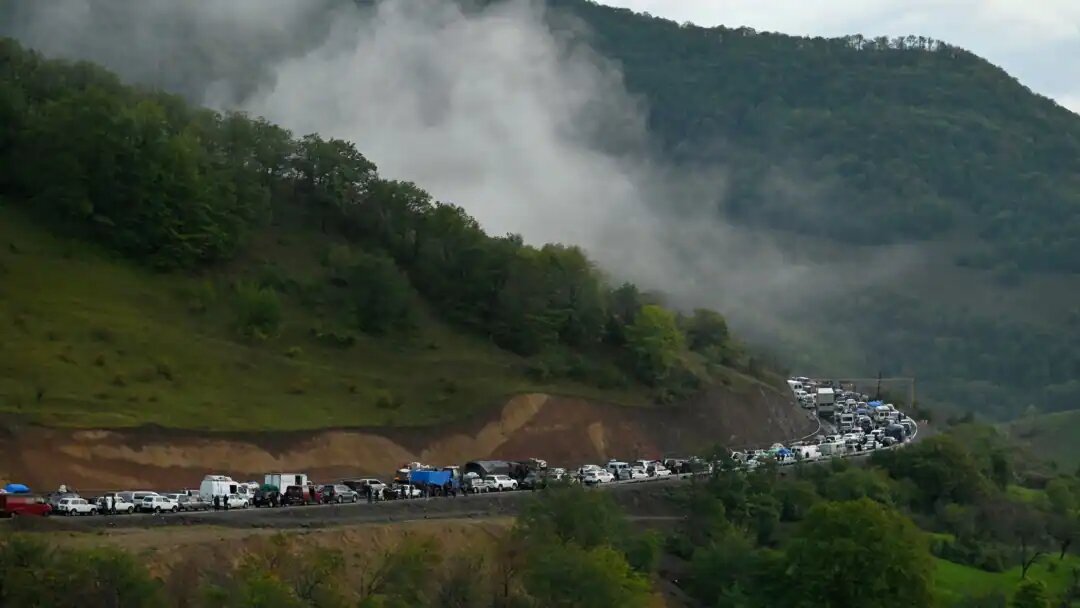
The Freedom House human rights organization has published the Nations in Transit report, which evaluates the state of democracy in the regions from Central Europe to Central Asia. The report addresses the developments in Artsakh in 2023. Freedom House described of Azerbaijani attack of September as an act of ethnic cleansing, "an inhumane conquest of Nagorno-Karabakh that demonstrated once again the deadly consequences of autocracy’s expansion."
The human rights organization notes that the President of Azerbaijan, Ilham Aliyev, had long been intending to erase the de facto independence of Nagorno-Karabakh. Baku launched the attack in September after a months-long blockade that deprived the people of Nagorno-Karabakh of essential goods. Freedom House reminds that the Russian peacekeepers made no effort to intervene during the attack.
After the attack, 120,000 Armenians had to leave to save their lives. Freedom House notes that this constitutes ethnic cleansing by Azerbaijan. It is also noted that Azerbaijan continues to threaten the existence of the Republic of Armenia and has occupied several territories in recent years.
This year, in another Freedom House annual report, "Freedom in the World", the section on Nagorno-Karabakh states that in 2020, tens of thousands of people left the region where Azerbaijani troops targeted civilians and committed atrocities against the Armenian servicemen. “Military attacks and psychological pressure in 2022 led to a new displacement wave: Azerbaijani troops gained control of strategic mountain heights, resulting in increased fears of renewed violence. Azerbaijani forces also organized psychological campaigns against people living near the front lines by using loudspeakers to amplify threats and Islamic music. In March 2022, during a particularly severe winter, the region was left with no gas supply following an apparent attack on the main pipeline by Azerbaijani soldiers.
In December 2022, Azerbaijani activists began blocking the Lachin transit corridor, the only road that connected Nagorno-Karabakh with Armenia and rest of the world. UN experts said in August 2023 that the prolonged blockade placed the lives of residents, “especially children, persons with disabilities, older persons, pregnant women, and the sick, at significant risk,” calling the situation a “dire humanitarian crisis.” Residents had limited access to essential supplies including food, fuel, and medicine. Azerbaijani military forces established a checkpoint on the road in April, despite the fact that Russian peacekeepers were formally responsible for the corridor’s security.
Ethnic Armenians were permitted to flee the territory through the Lachin corridor after the Azerbaijani regime’s two-day military operation. Presented with the choice of accepting Azerbaijani citizenship and governance or leaving, almost the entire ethnic Armenian population of more than 100,000 evacuated to Armenia. While Azerbaijani authorities pledged to protect the rights of individuals who stayed behind, residents and human rights groups considered these promises to be dubious in light of the severe harms caused by the blockade, past abuses, and the Azerbaijani government’s poor record of respecting political rights and civil liberties in general,” the reports says.